December 2025 AIR

The Australian Automotive Dealer Association (AADA), in partnership with AutoGrab, has released the December 2025 Automotive Insights Report (AIR), providing a national snapshot of used car sales and listings.

The latest figures show further softening in the used car market to close out the year, with December recording the lowest monthly sales result since January 2025, alongside the lowest level of active listings for the year. At the same time, vehicles are taking longer to sell, reinforcing the gradual cooling that has emerged over recent months.

National used car sales fell to 171,837 vehicles, down 11.1 per cent from November, while total active listings declined 1.7 per cent to 308,315, marking the lowest listing volume recorded in 2025.

“December capped off a year where momentum in the used car market steadily eased, with listings falling to their lowest point of 2025,” said AADA CEO James Voortman.

“Longer days to sell are now a clear trend, reflecting more price sensitivity among buyers and a more balanced market environment compared to the heightened conditions of recent years,” he said.
Despite the overall slowdown, alternative powertrains continued to gain ground. Hybrid vehicles, electric vehicles and plug-in hybrid electric vehicles all increased their share of the used car market compared to December 2024, highlighting ongoing consumer interest in lower-emission options, even as total sales volumes declined.

Key insights from the December 2025 AIR include:

  • Sales decrease: National used car sales fell to 171,837 vehicles, the lowest monthly result since January 2025.
  • Listings tighten: Total listings for the month declined to 308,315, the lowest level recorded since August 2024.
  • Slower turnover: Average days to sell rose to 47.0 days, increasing for the third month in a row.
  • Broad-based decline: Sales eased across all states and major vehicle segments, consistent with a softer end-of-year market.

View the full December 2025 AIR below.

The AADA and AutoGrab will release the ‘2025 Year That Was’ Automotive Insights Report in the coming weeks, providing a comprehensive overview of used car market trends across the full calendar year.

New Vehicle Sales 2025

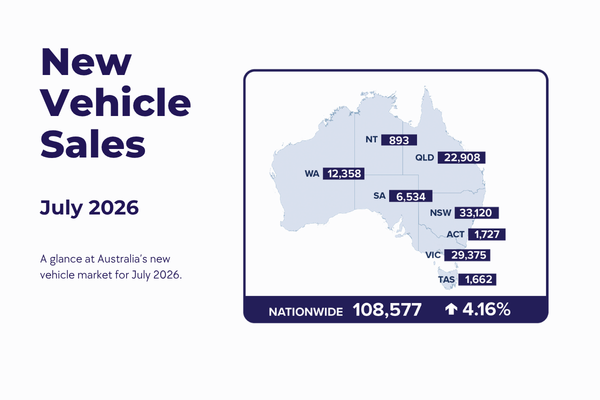
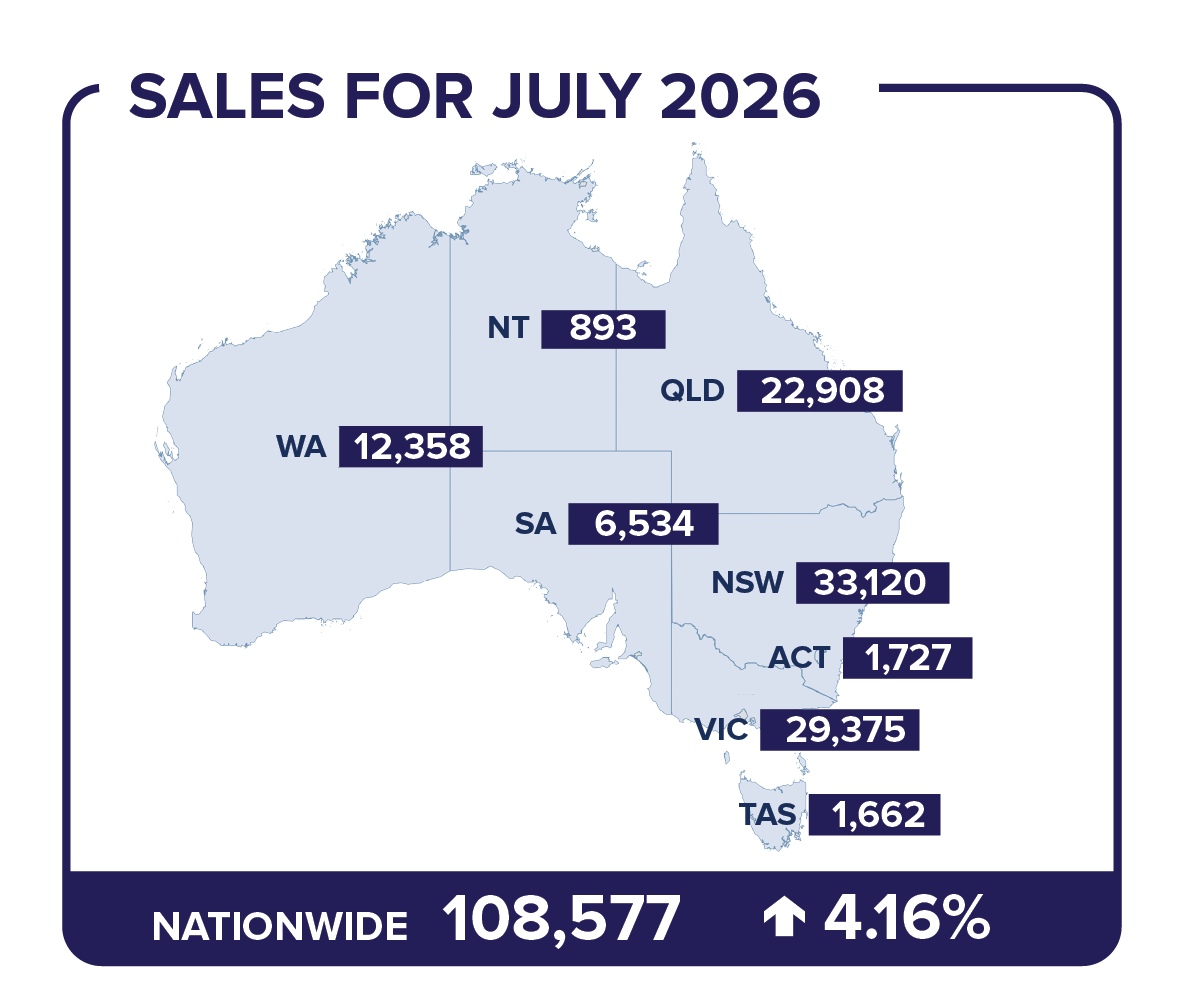
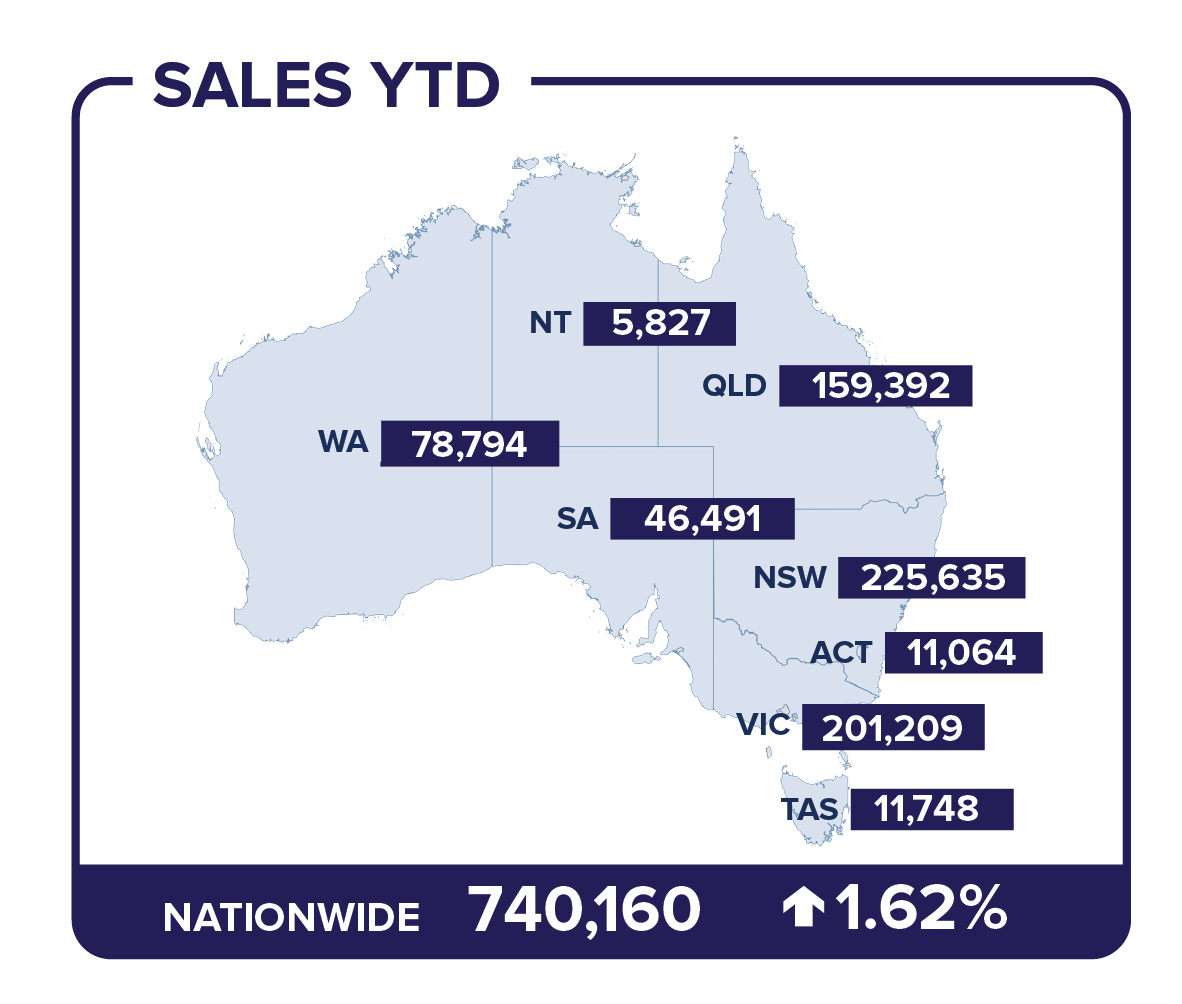
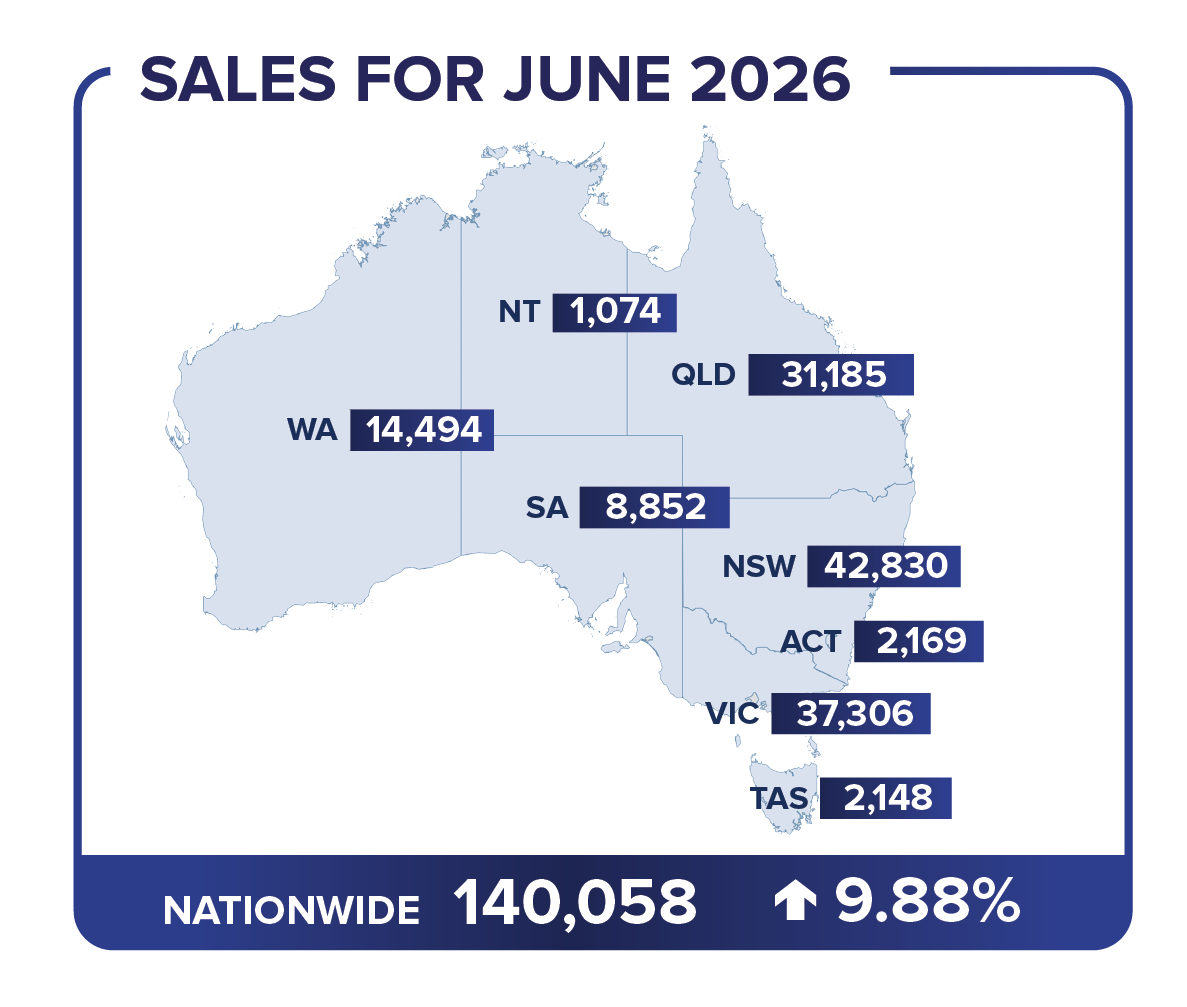
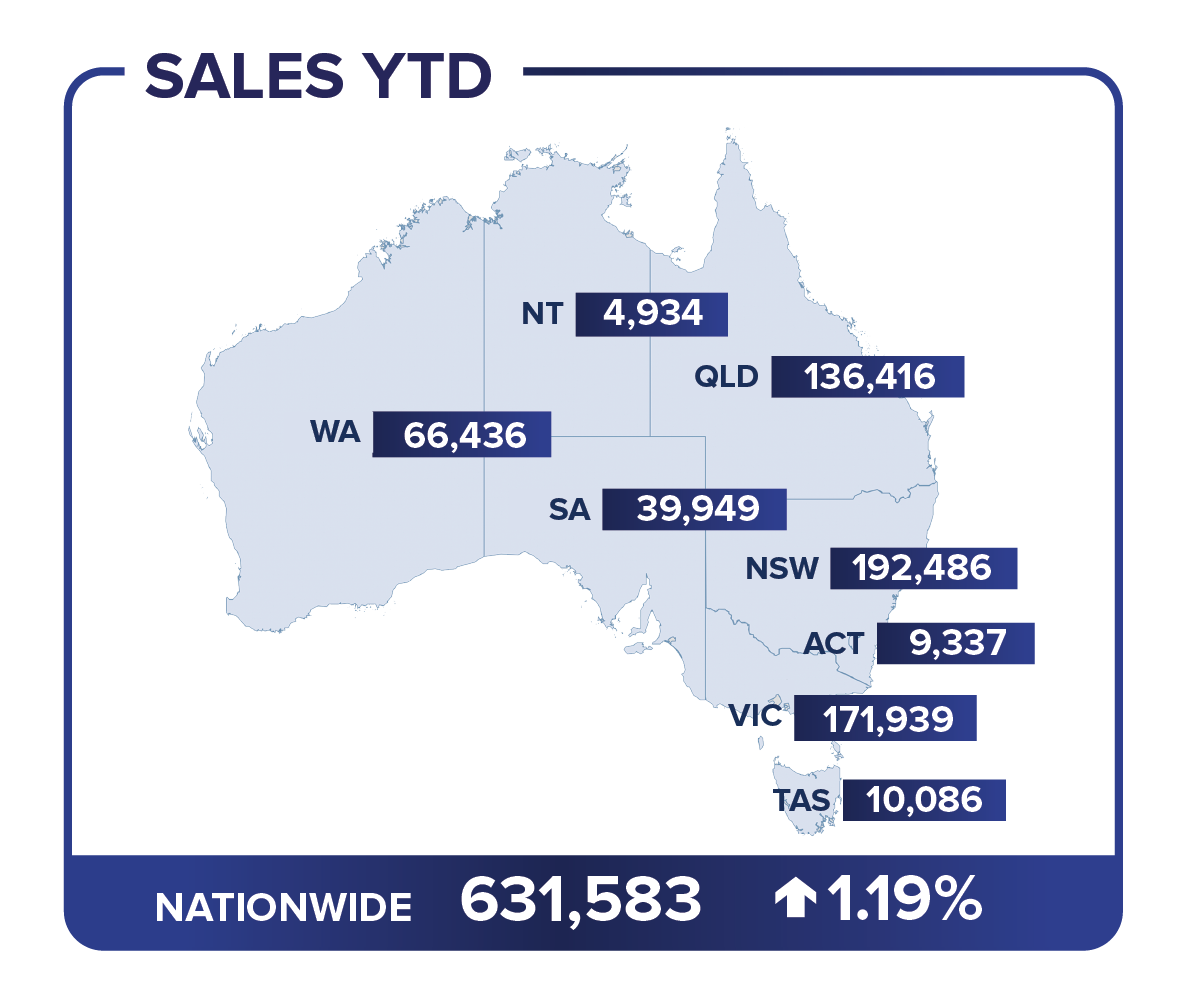
New vehicle sales for December 2025 and the full calendar year were released this week by the Federal Chamber of Automotive Industries and the Electric Vehicle Council.

New car sales in 2025 edged higher than the previous year, reaching 1,241,037 vehicles sold, representing a 0.3 per cent increase year-on-year.

While December sales were broadly consistent with the same period last year, 2025 still recorded a new annual sales record, defying earlier forecasts of a slowdown amid ongoing cost pressures and intense market competition.

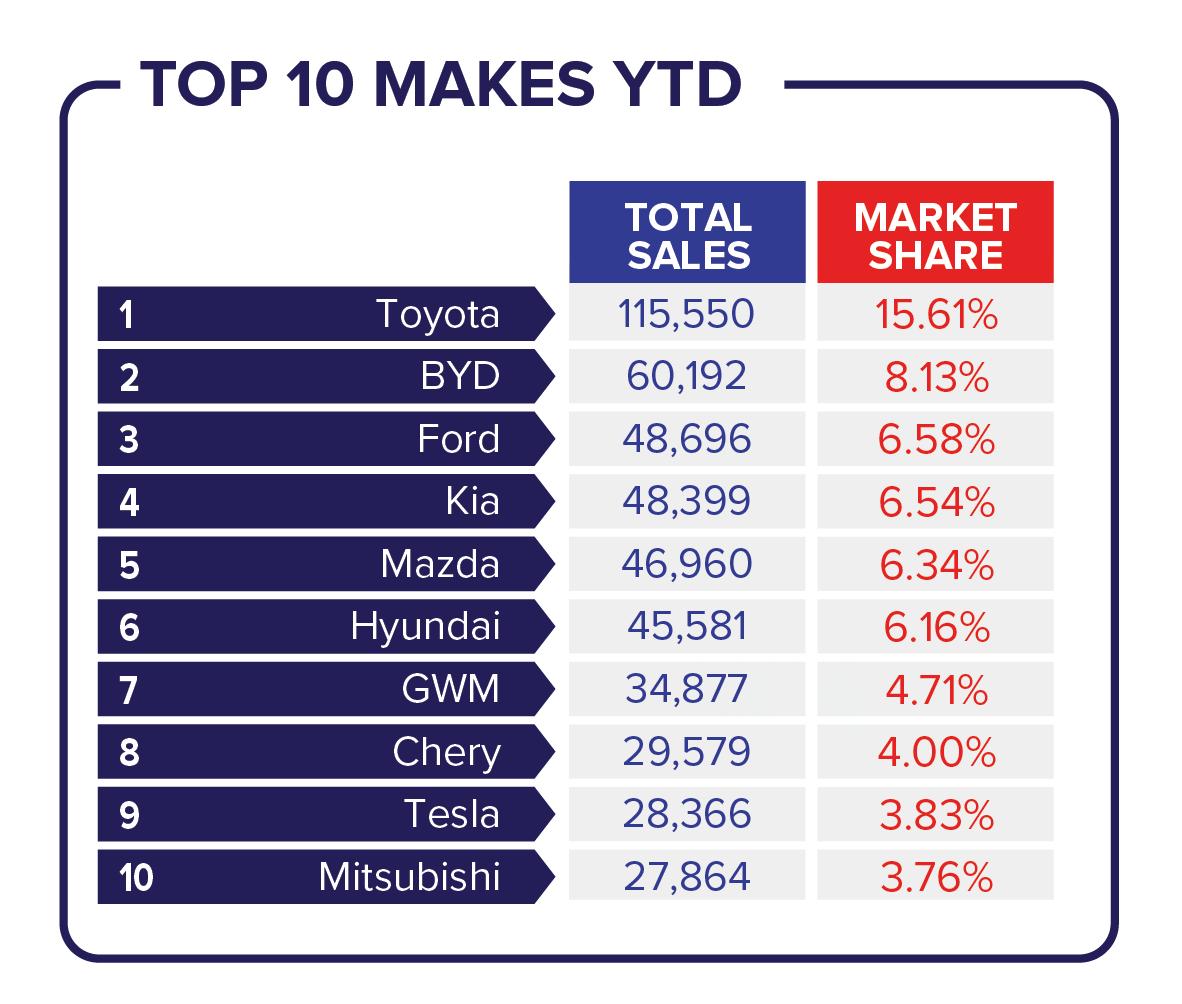
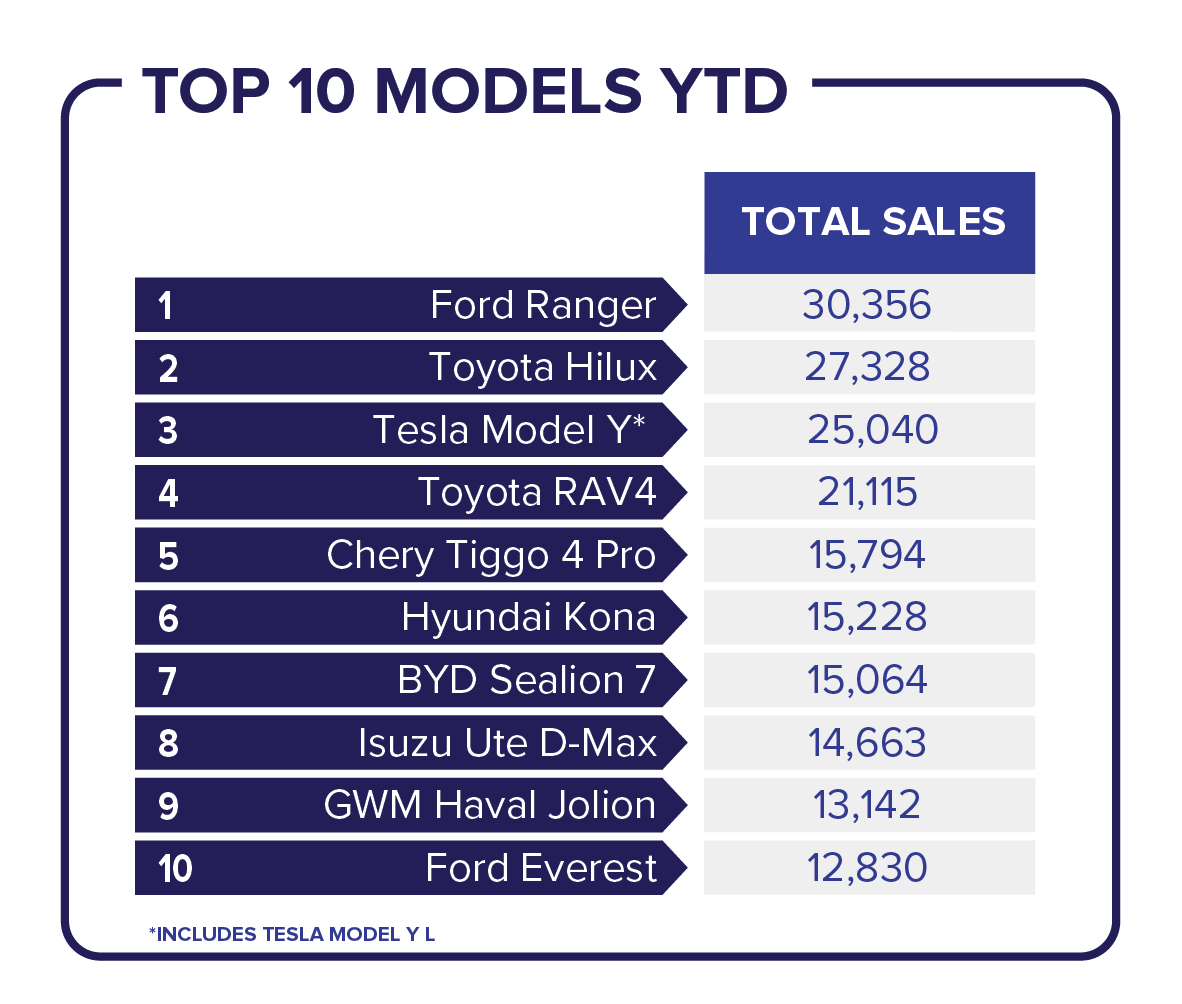
Toyota retained its position as Australia’s leading automotive brand in 2025, recording 239,863 sales and a market share of 19.3 per cent. Ford and Mazda followed in second and third positions, while Kia and Hyundai rounded out the top five. Notably, Chinese-manufactured brands continued to strengthen their presence, with GWM, BYD and MG all featuring in the top ten, highlighting the growing influence of Chinese OEMs in the Australian market.

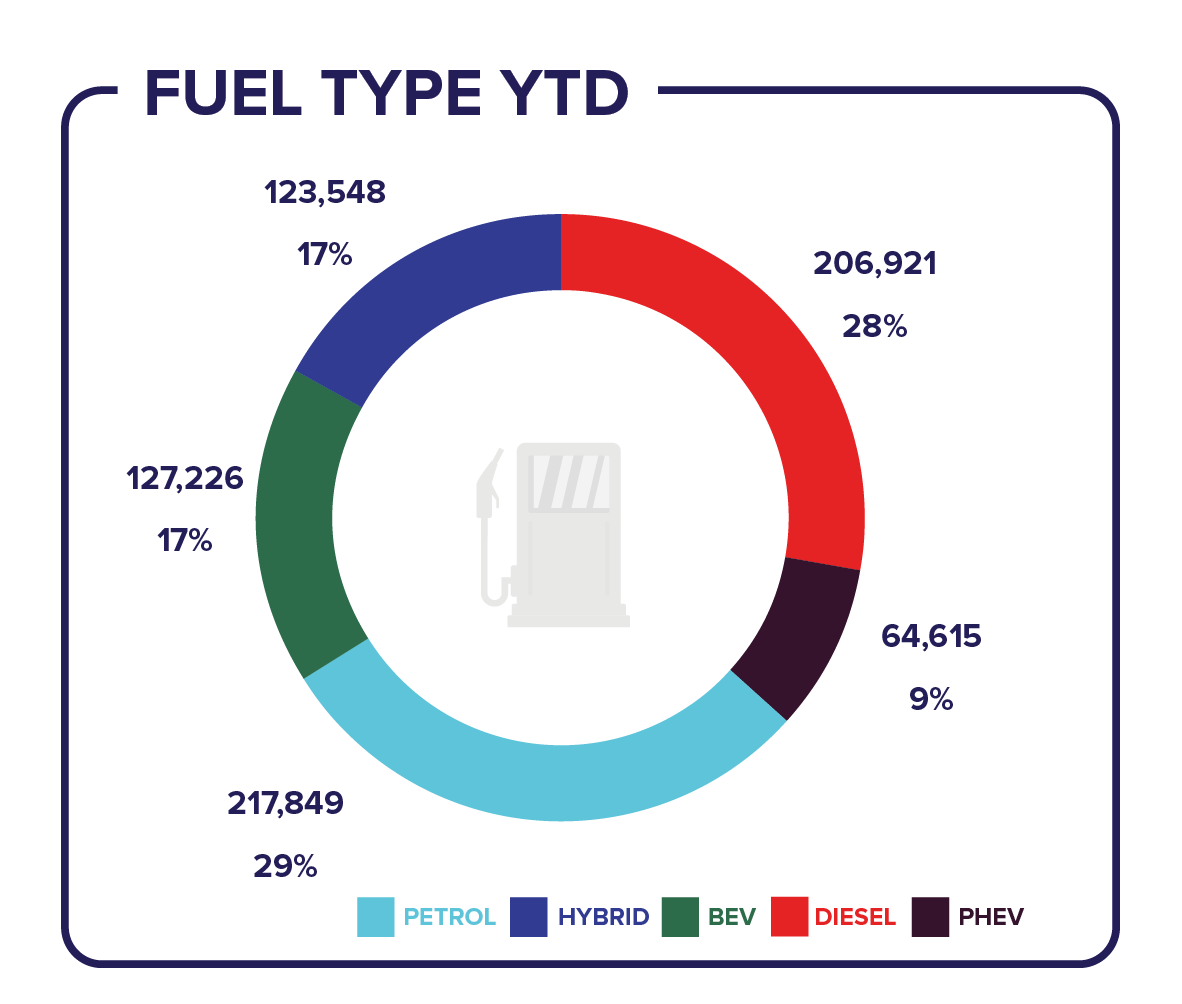
In terms of fuel types, consumers increasingly turned to electrified options. Plug-in hybrid electric vehicle (PHEV) sales more than doubled year-on-year, seeing a 130 per cent increase and making PHEVs one of the fastest growing segments from 2025. Battery electric vehicles (BEVs) also increased their share, reaching approximately 9 per cent of the market in 2025, while hybrid vehicle sales continued their upward trend, growing from 172,699 in 2024 to 199,133 vehicles in 2025. This reflects a gradual shift in buyer behaviour as more electrified models become available across a wider range of price points and segments.

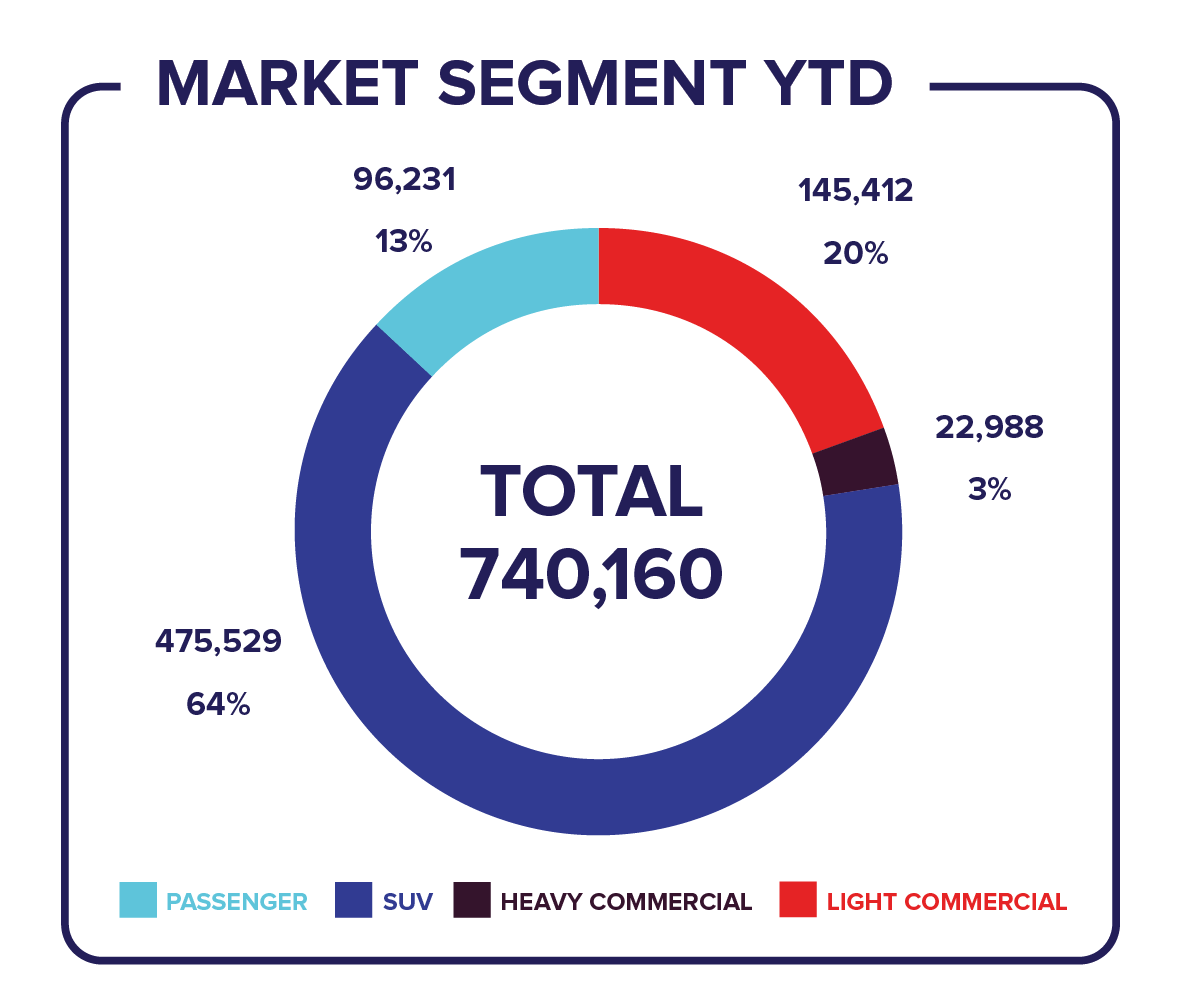
SUVs and light commercial vehicles continued to dominate consumer preferences, together accounting for almost 74 per cent of total new vehicle sales for the year.

As the industry adjusts to evolving emissions policy settings and intensifying competition, particularly from new market entrants, 2026 is expected to remain a challenging year for dealers and manufacturers alike.

Record Increase of Imported Car Brands Coming to Australia

New data released shows that Australia will have 67 brands selling vehicles in Australia in 2026 and 75 brands in 2031 making it one of the most competitive markets in the world.

The Australian Automotive Dealer Association (AADA) commissioned respected automotive data and modelling agency Blue Flag to detail the number of brands projected to come to Australia so that franchised new car dealers fully understand the market wave that is coming their way.

“We are currently seeing an overflooding of the Australian market with new brands coming thick and fast,” said AADA CEO James Voortman.

The new data details that in 2026 there will be a record number of brands with 8 new entrants stating their intentions to set up in Australia from last year and an increase of 28 new brands by the year 2031, a 92 per cent rise in the number of brands in Australia in 10 years from 2021.

“These new brands see Australia as having very attractive policy settings that are geared for the supply of electric vehicles where they can test their product in a western market with low upfront investment when compared to other western countries.”

“What is obvious is not all these new, and even established brands will be able to compete long term. Australian drivers will always be attracted to value-based products that offer a quality experience but more so, a quality after sales experience with reliable and timely servicing and repair work. Brands that cannot compete on that level will struggle.”

However, in the race to supply vehicles to Australia, the AADA is asking the Government to move at pace to protect Australian franchised new car dealers with their election commitment before we start to see market consolidation and departures.

“After recent the recent Federal Court decision involving Australian new car dealers and Mercedes-Benz AG, we have seen that franchising laws will not protect against franchisors using their power imbalances to increase their profits at the expense of Australian businesses.”

“The Albanese Government must move to legislate on their election commitment to introduce an Unfair Trading Practices regime to protect franchised new car dealers which will give them confidence to invest in the transition to electric vehicles.”

AADA Holiday Closure Notice

The AADA team wishes everyone a very Merry Christmas and a safe and Happy New Year. We’re grateful for our member’s continued support throughout what has been a busy and productive year, and we look forward to what 2026 has to bring.

Please note that our offices will be closed from lunchtime Wednesday 24 December 2025, and will reopen on Monday 5 January 2026.

During this period, AADA staff will remain on standby should any urgent matters arise for members.

November 2025 AIR

The Australian Automotive Dealer Association (AADA), in partnership with AutoGrab, has released the November 2025 Automotive Insights Report (AIR). The report provides a national snapshot of used car sales and listings, with the figures revealing a broad softening across the used car market as both sales and listings decline.

National used car sales fell to 193,266 vehicles, down 6.4 per cent from October, while total active listings eased 3.5 per cent to 313,781. The slowdown was consistent across all major states and segments, signalling a cooling phase following a long period of heightened activity.

“November saw a clear softening across the board, with fewer buyers active in the market and a gradual reduction in stock levels,” said AADA CEO James Voortman.

“This softer activity is something many dealers will recognise on the ground, fewer leads, longer days to sell, and a shift toward more deliberate consumer purchasing behaviour,” he said.

Key insights from the November 2025 AIR include:

  • Sales soften: National used car sales declined 6.4 per cent to 193,266 vehicles, with decreases across every state and territory.
  • Market cooling: Average days to sell increased to 46.7 days, indicating slower turnover.
  • Listings ease: Total used car listings dropped 3.5 per cent to 313,781, with most states showing reduced supply.
  • Fuel types ease evenly: Sales across all fuel types declined at a broadly similar rate, reflecting the overall softening in the market.
  • SUVs remain strong: SUVs accounted for over 43 per cent of all used car sales despite month-on-month declines.

View the full November 2025 AIR below.


DOWNLOAD NOVEMBER 2025 AIR

Independent Root and Branch Review of ACL

The Australian Automotive Dealer Association (AADA), which represents over 3,000 franchised new car dealers, has launched a Review into the Australian Consumer Law (ACL) in the automotive industry to ensure that both consumers and Australian retailers are better protected under the law.

Today the AADA has launched its Review and is calling for submissions from all industry stakeholders including auto manufacturers, consumer groups, and other industry associations on how the ACL is currently performing for both car buyers and automotive dealers alike. The timing for the review is appropriate, given the arrival of many new brands and manufacturers to our shores.

As a first step, the AADA has engaged an independent expert, Emeritus Professor Jenny Buchan, to develop an Issues Paper to be published in the first quarter of 2026. Emeritus Professor Buchan is an expert in addressing power imbalances in relationships between small and large business, and she will be consulting with industry, government and consumer groups before publishing the Issues Paper early in 2026.

“Quite rightly consumers purchasing motor vehicles hold the dealer and manufacturer(s) of those products and services to a very high standard,” said AADA CEO James Voortman, CEO of AADA.

“However all too often it is the dealer, who played no role in manufacturing the vehicle, who carries the lion’s share of risk in meeting the ACL obligations, with flow on effects on the consumer.”

“The vulnerable position of the dealer can often be used by some manufacturers to reduce their own risk by obstructing the dealers’ statutory right to indemnification. This practice by the manufacturer (who built the vehicle), is a key feature of the power imbalance found in our industry and has negative consequences for consumers.”

To ensure that the Issues Paper clearly identifies issues surrounding the effectiveness of the ACL in meeting automotive consumers’ expectations, Prof. Buchan will conduct the review by interviewing key stakeholders, reviewing relevant ACL provisions and publishing key findings on how the automotive industry is unique in its obligations to consumers. The review will also look to best practices overseas where the vehicle manufacturers are in no doubt as to what the indemnification processes are.

“Identifying and addressing power imbalances has been a key feature of my professional experience. To be able to bring my experience and author this Issues Paper, when the biggest transition to low emission vehicles is happening right now in Australia, is something that I can see is very pertinent,” said Emeritus Professor Jenny Buchan.

This Review is timely considering the recent Government announcement to strengthen supplier indemnification laws, making now an opportune time to ensure that there is clarity in applying the law on behalf of consumers and if not, there is time to amend laws before new civil penalties are in place.

For more information about the Review and how to make a submission head to  https://www.aada.asn.au/acl-review/.

About Emeritus Professor Jenny Buchan LLB (Otago) LLM (Melbourne), PhD (QUT) 

Prior to working for UNSW Business School to teach law to business graduates in 2002 Jenny Buchan worked for 20 years as a transactional lawyer in New Zealand, Melbourne and Sydney, and as a competition and consumer protection law compliance consultant. Now, she teaches law at UNSW Law School and is a Senior Advisor at H&H Lawyers.

In recognition of her expertise in franchising and consumer law she was a panel member of the Australian Competition and Consumer Commission’s Small Business Consultative Committee from 2010 – 2022.

Jenny’s research has addressed power imbalances in relationships between small and large business, a stark focus in many franchise relationships.

Government Announcement on Supplier Indemnification and UTP Welcome

The Australian Automotive Dealer Association (AADA) welcomes the commitment by Consumer Affairs Ministers to improve supplier indemnification under the Australian Consumer Law and the announcement that work has commenced to introduce an Unfair Trading Practices regime to franchising.

This announcement is testament to the effective work of Minister Andrew Leigh and represents a crucial first step in giving confidence to new car dealers to provide new and emerging car brands and technologies to consumers.

With Government policies such as NVES and the FBT Exemption for electric vehicles incentivising a record amount of new car manufacturers to enter the Australian market, it is imperative to have in place strong consumer and dealer protections.

“The AADA is seeing an unprecedented number of new brands entering or signalling their intention to come to Australia. This will bring positive consumer outcomes in terms of competitive pricing, but it is important that adequate protections are also in place,” said AADA CEO James Voortman.

“The changes to the law will make it harder for international car brands to escape their indemnification obligations under the ACL and result in better outcomes for dealers and consumers. The ACCC and other inquiries have found that new car dealers often struggle to enforce their statutory rights to be indemnified when honouring their ACL obligations with existing brands let alone new untested brands.”

While this is a very important first step, the AADA believes a lot more work needs to be done to ensure that Australia’s consumer law framework is fit for purpose for the challenging times ahead when consumers are looking to purchase new and emerging brands.

The AADA also commends the announcement that work has begun on their election commitment to introduce an Unfair Trading Practices regime to the Franchising Code of Conduct. Recently a Federal Court Judge found that amendments must be made to the Franchising Code in order to protect dealer’s investments.

October 2025 AIR

The Australian Automotive Dealer Association (AADA), in partnership with AutoGrab, has released the October 2025 Automotive Insights Report (AIR). The report provides a national snapshot of used car sales and listings, with 206,503 vehicles sold during the month, up 2.8 per cent on September.

AADA CEO James Voortman said hybrid sales continue to climb as Australians seek vehicles that meet their lifestyle needs while reducing their environmental impact.

“Used hybrid sales have more than doubled in the last two years, rising from 6,868 in October 2023 to 14,784 vehicles this month,” Mr Voortman said.

“Consumers are clearly looking for practical options that deliver lower running costs and emissions without compromising on convenience. Hybrid vehicles are offering that middle ground with a proven technology that suits everyday driving and reflects growing environmental awareness.”

Hybrid listings also increased strongly, up 21.1 per cent month-on-month, highlighting rising supply and consumer confidence in the segment.

While electric vehicle sales also rose modestly (up 7.9 per cent), the hybrid segment showed the sharpest growth, outpacing both petrol and diesel. Overall used car activity remained stable, with total listings easing 3.9 per cent and dealers accounting for 52.4 per cent of all sales.

“We’re seeing a diverse market where buyers are weighing all their options,” Mr Voortman said.

“Australians are purchasing vehicles that best suit their needs, whether that’s a hybrid for daily efficiency, a diesel for towing, or an electric vehicle, but there’s a definite trend toward more sustainable choices,” he said.

Key insights from the October 2025 AIR include:

  • Sales rise: National used car sales totalled 206,503, up 2.8 per cent month-on-month.
  • Listings ease: Active listings fell 3.9 per cent to 325,018, with reductions across most states.
  • Hybrid momentum builds: Used hybrid sales climbed 37.3 per cent month-on-month and are up nearly 50 per cent year-on-year.
  • EVs gain traction: Used EV sales rose 7.9 per cent to 3,231 vehicles, continuing steady growth.
  • SUVs remain dominant: The segment accounted for over 43 per cent of all used car sales.

New Vehicle Sales October 2025

New vehicle sales in October 2025 recorded a 0.69 per cent increase on the same month last year, continuing a trend of steady market performance. 100,658 new vehicles were delivered across the country in October.

Year-to-date, sales reached 1,039,618, up 0.36 per cent on 2024.

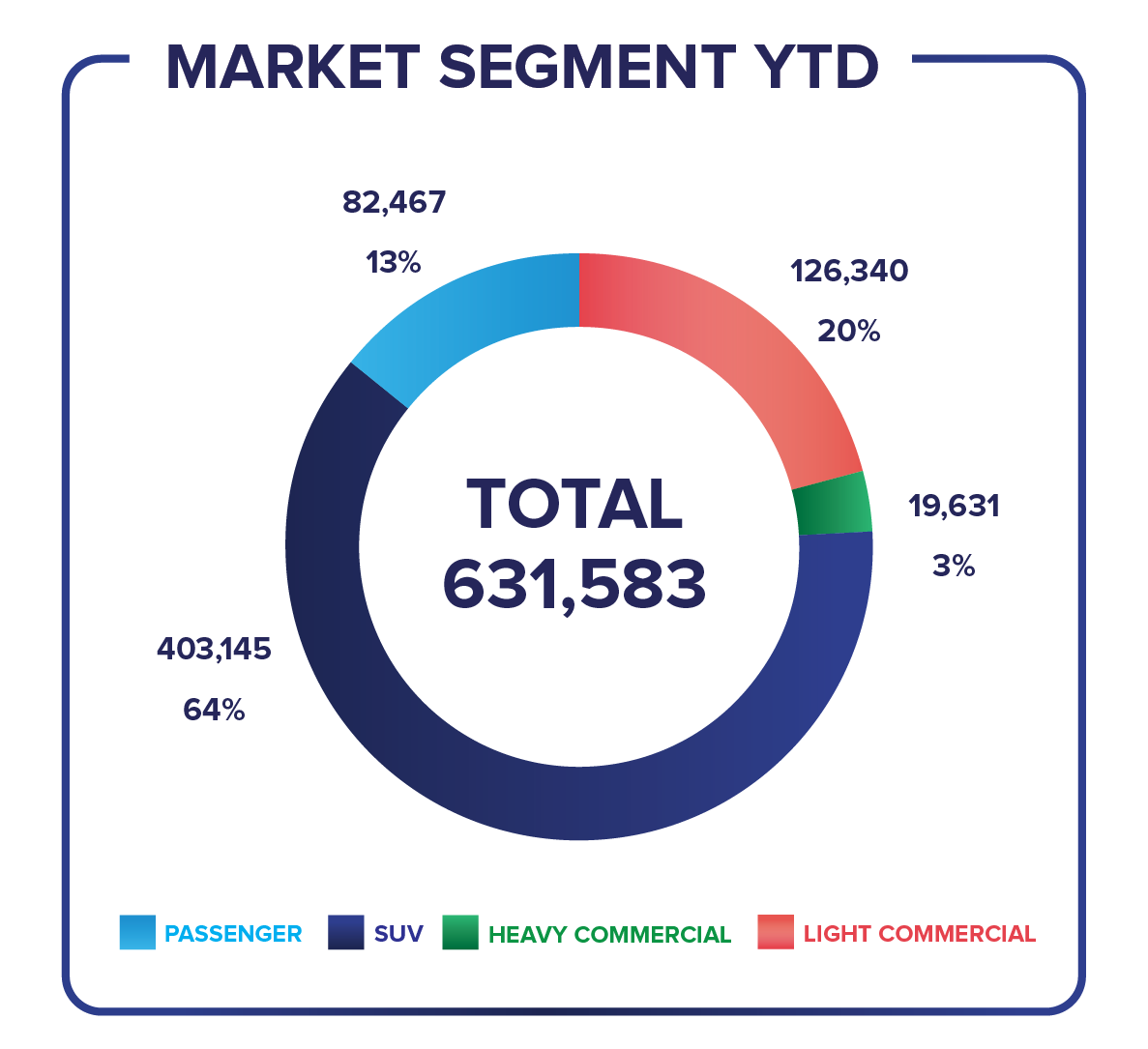
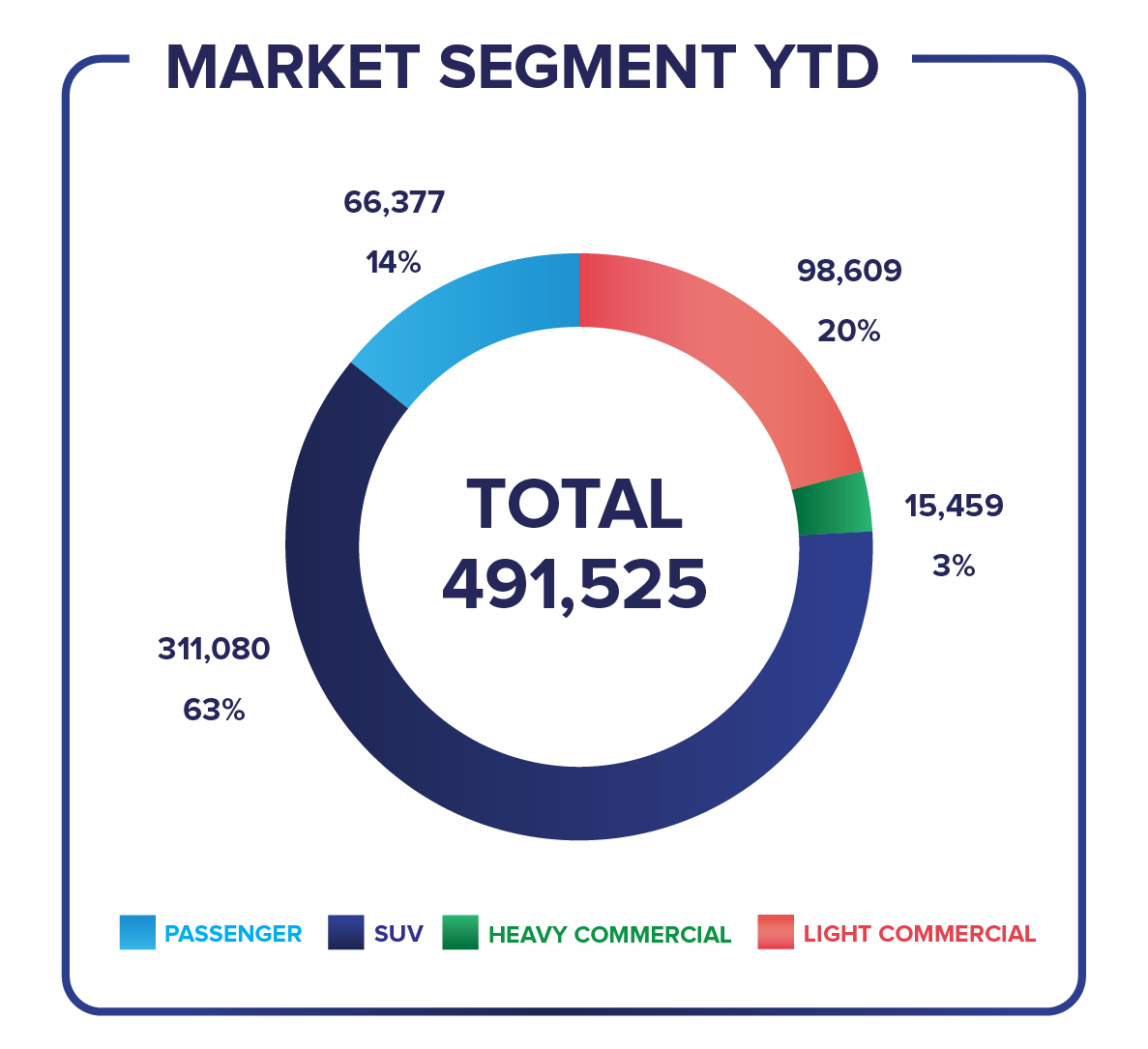
Market segment data shows SUVs remain the dominant preference for Australian motorists, representing 60 per cent of total sales year-to-date. Passenger vehicles accounted for 22 per cent, with light commercials at 14 per cent and heavy commercials at 4 per cent.

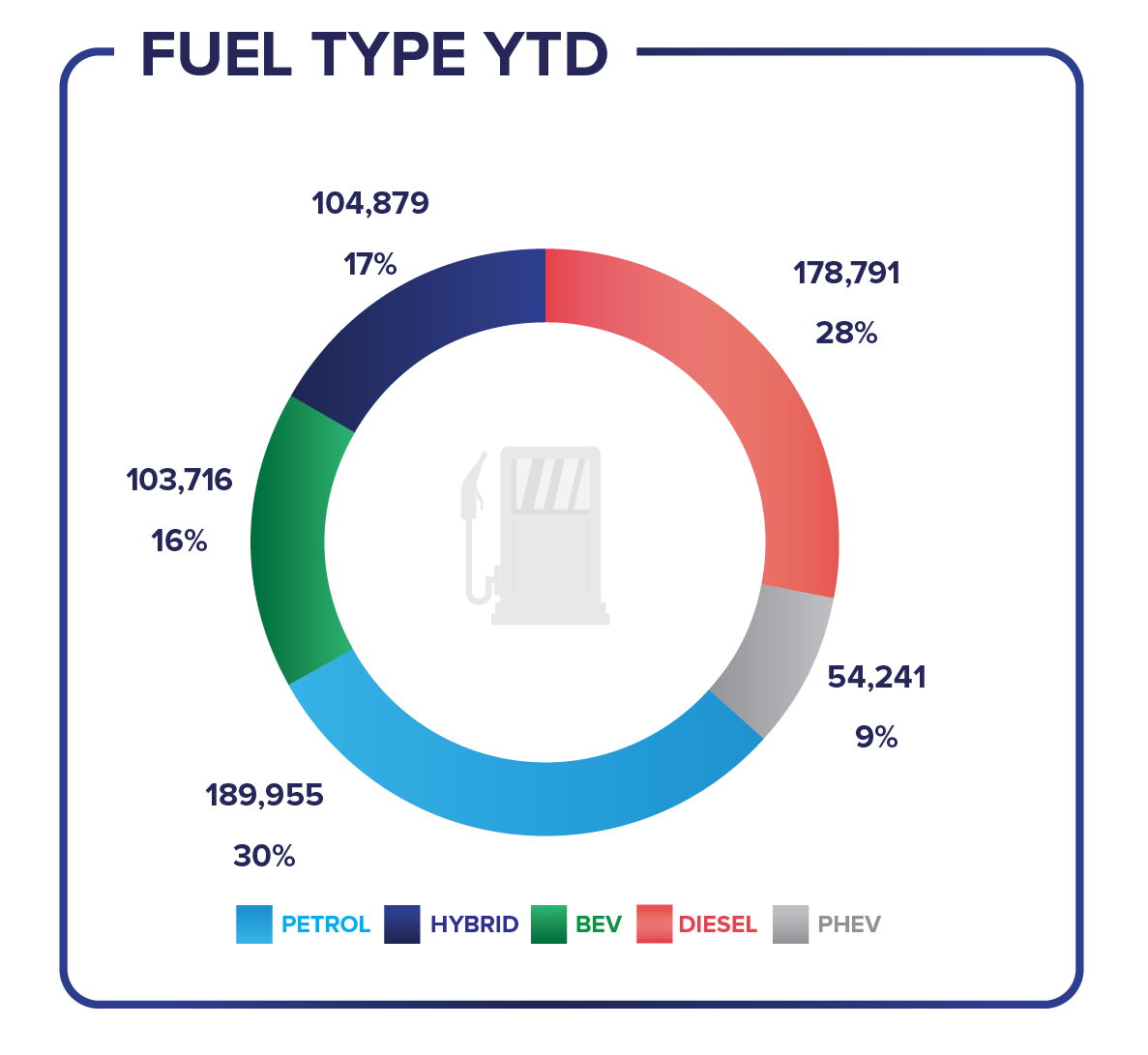
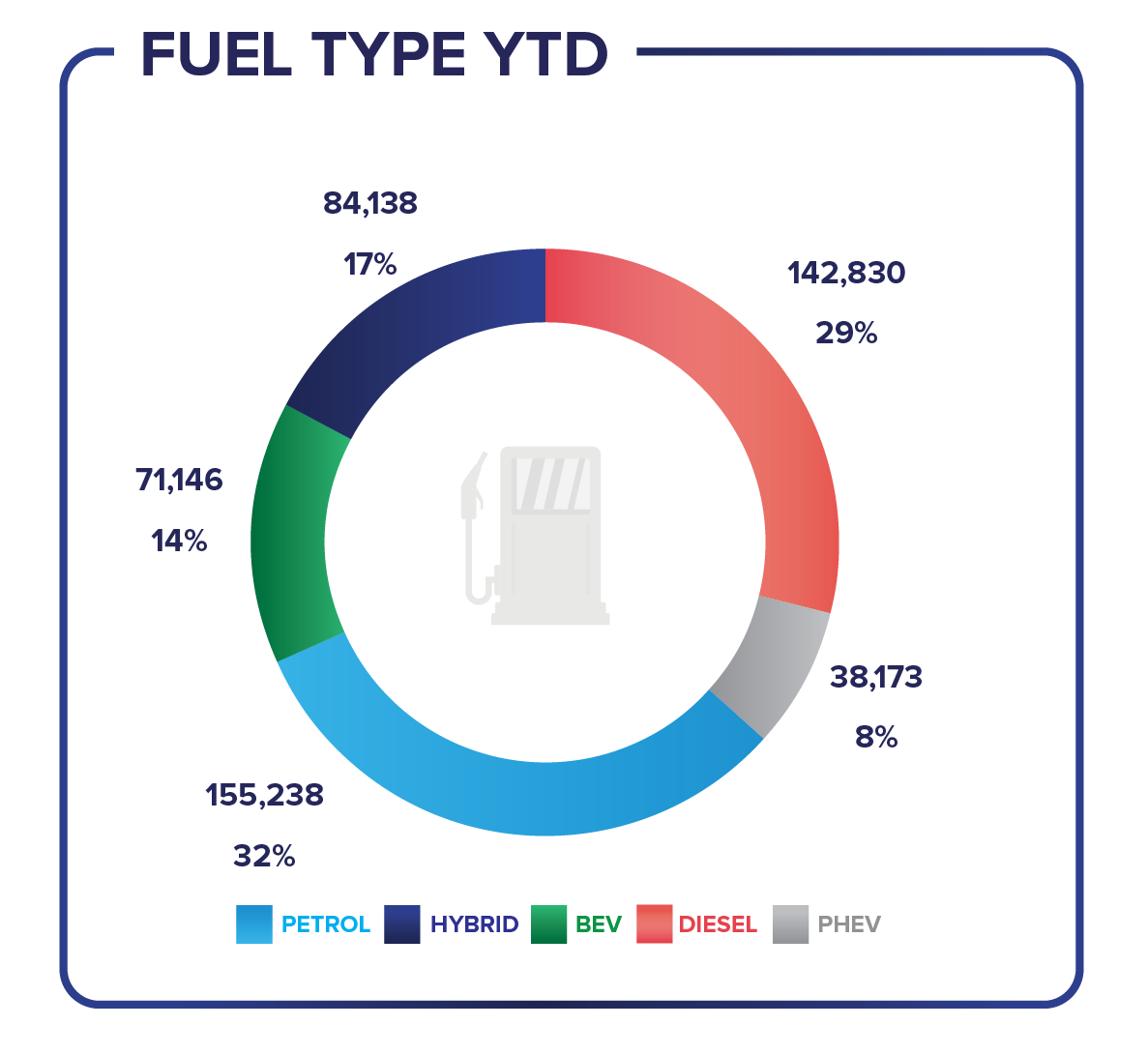
Electrified vehicle uptake continues to build, supported by growing model availability and consumer interest. Hybrids account for 16 per cent of sales YTD, with 8 per cent battery electric vehicles and 4 per cent plug-in hybrids.

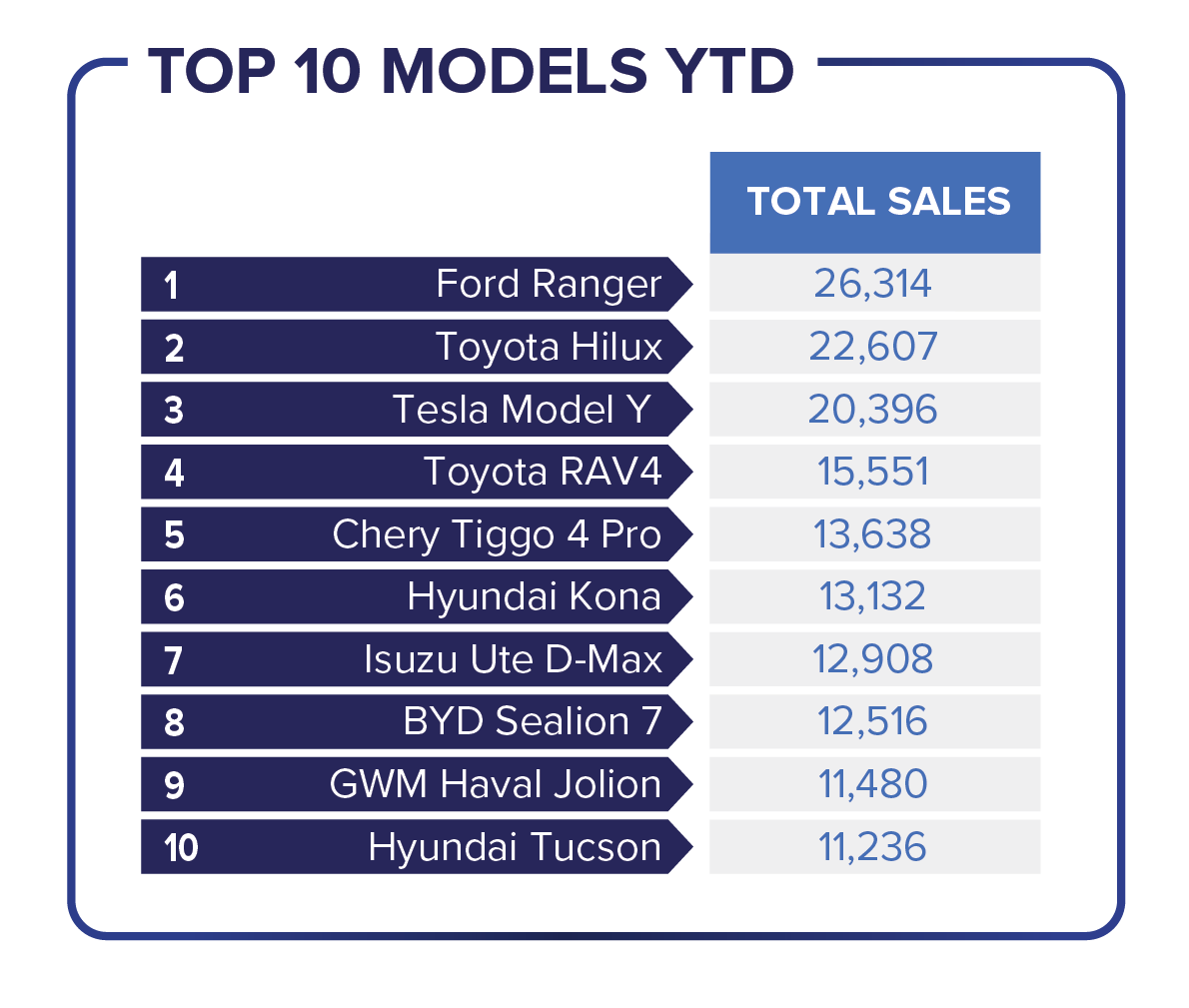
The top-selling brands year-to-date were led by Toyota, retaining strong leadership with 201,535 units and 19.39 per cent market share. The Ford Ranger remains Australia’s highest selling model with 46,452 sales YTD.

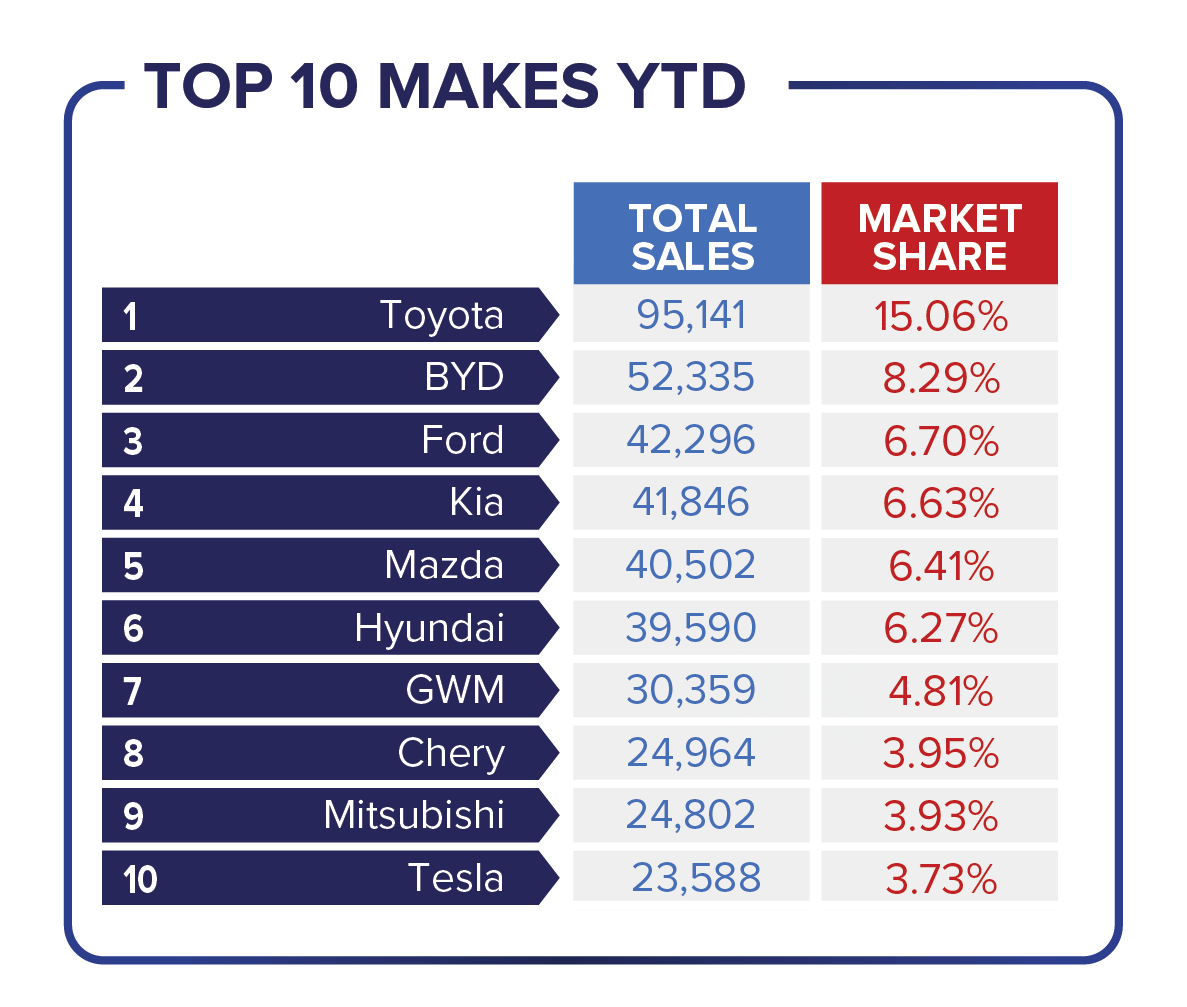
The AADA has assessed VFACTs and EVC Top 10 Makes & Models YTD, ranking them by volume. The AADA has also analysed new vehicle sales figures by state for the month of October, as well as fuel types and market segments.

September 2025 AIR

The Australian Automotive Dealer Association (AADA), in partnership with AutoGrab, has released the September 2025 Automotive Insights Report (AIR). The report is a national snapshot of used car sales and listings for the month of September, with 200,916 vehicles sold during the month.

AADA CEO James Voortman said price pressures in the new EV market are clearly flowing through to used cars with challenges remaining regarding vehicle depreciation.

“Used EV prices have dropped faster than the rest of the market, which isn’t surprising given the big discounts now being offered on new models,” he said.

“We’re seeing those price cuts flow through to the second-hand market, so buyers are getting better value but sellers are facing steeper depreciation.”

“Higher depreciation doesn’t just impact private owners, it flows through to trade-in values, dealer margins and fleet replacement costs, all of which shape how quickly EV adoption grows,” said Mr Voortman.

September’s results show the used car market holding steady, with total sales edging slightly lower but vehicles selling faster than at any point this year. Average days to sell fell again, indicating sustained buyer activity despite overall volumes easing.

Key insights from September include:

  • Sales ease slightly: National used car sales totalled 200,916, down 1.3 per cent month-on-month. NSW and the NT bucked the trend, recording increases in sales activity.
  • Vehicles selling faster: The average days to sell fell to 42.4 days, down from 43.9 in August – the lowest figure of 2025 so far and continuing the steady decline from March’s high of 51.3 days.
  • Dealer activity steady: Dealers accounted for 53.1 per cent of all sales and 59.8 per cent of listings, showing stable participation despite a marginal dip in total active listings to 338,090.
  • EV momentum returns: Used EV sales rose 8.9 per cent to 2,995 vehicles, reversing last month’s fall.

“The used car market continues to show resilience. Even with overall volumes softening, vehicles are turning over faster, which highlights strong underlying demand for well-priced stock. Dealers are maintaining solid inventory levels and adapting quickly to changing consumer preferences,” said Mr Voortman.