Australian’s Turn to EVs to Cut Costs

New AADA research finds cheaper running costs have overtaken environmental concerns as the number one reason Australians would consider an electric vehicle, as Chinese brands continue to gain a larger market share.

Australians are increasingly viewing electric vehicles as a way to save money rather than save the planet, according to new research released by the Australian Automotive Dealer Association (AADA).

AADA’s latest national consumer research has found that cheaper running and recharging costs are now the leading reason Australians would consider purchasing an electric vehicle (EV), overtaking environmental benefits from January this year and for the first time since the AADA began tracking consumer sentiment more than four years ago.

AADA CEO James Voortman will present the new research findings to more than 900 dealers and automotive stakeholders at the AADA Convention & Expo in Sydney today.

“This is one of the most significant shifts we have seen since AADA began tracking EV sentiment,” Mr. Voortman said. “For years, Australians considered EVs primarily for their environmental benefits. Today, the biggest attraction is their lower running and recharging costs compared with petrol or diesel vehicles.”

The research found that 45 per cent of prospective EV buyers nominate lower running and charging costs as a reason for considering an EV, making it the most important driver of future EV interest. At the same time, environmental motivations have continued to decline significantly.

“The conflict in Iran and renewed concerns around global energy markets have focused attention on fuel affordability and fuel security,” Mr. Voortman said. “Australians are increasingly viewing EVs through a practical financial lens rather than an environmental one.”

The study found that 55 per cent of Australians agree rising petrol and diesel prices make EVs more attractive, while EV consideration increased to 41 per cent of Australian drivers.

Australia’s automotive market is also undergoing unprecedented change. Australia is expected to have 67 vehicle brands competing in the market in 2026, rising to 75 brands by 2031 as manufacturers compete for a share of the growing EV market.

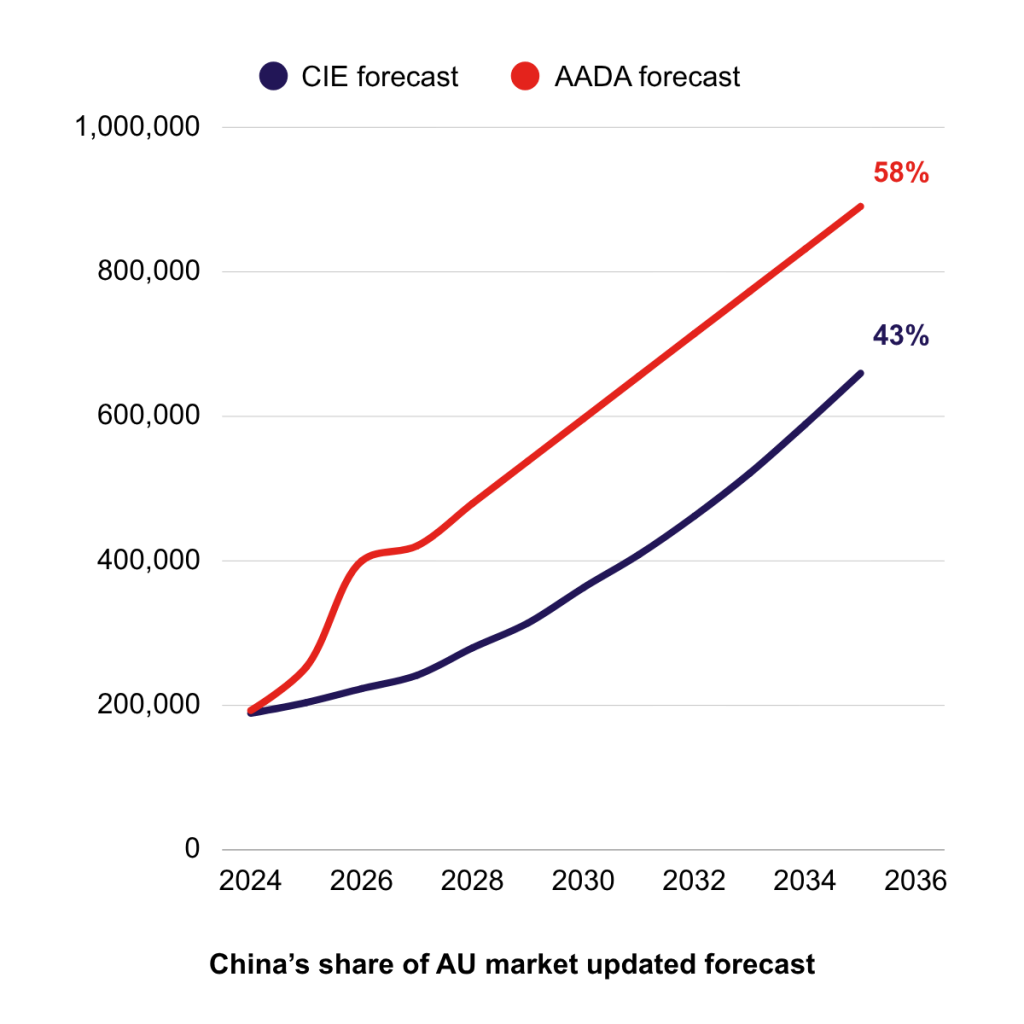
“The June new vehicle sales results show the transition is occurring more quickly than previously forecast, particularly for Chinese manufacturers,” Mr. Voortman said. “Based on recent sales trends, the AADA expects China to account for an even larger share of Australia’s new car market, reaching around 58 per cent by 2035, thereby exceeding previous estimates.”
“The Australian automotive market is undergoing the most significant transformation in its history,” Mr. Voortman said. “Consumer preferences are changing, technology is evolving, and new brands are entering the market at an extraordinary rate. More than 900 industry leaders will gather at the AADA Convention & Expo this week to discuss these trends and what they mean for dealers, manufacturers and consumers.”

“As this transformation accelerates, the Albanese Government must ensure the regulatory framework keeps pace. That means delivering stronger franchising protections for Australian new car dealers and modernising Australian consumer laws to ensure drivers remain protected as new brands enter the market. The pace of change is accelerating, and the policy settings that underpin consumer confidence, dealer investment and long-term market sustainability must evolve just as quickly.”
AADA Calls for Merger Regime Exemption

The Australian Automotive Dealer Association (AADA) is calling on Treasury to exempt family-owned and small to medium-sized franchised new car dealership transactions from Australia’s new mandatory merger notification regime following the release of an independent report prepared by BDO Australia.

The report demonstrates that the current turnover thresholds unintentionally capture family-owned, regional and small to medium-sized dealership transactions, not because those acquisitions create market power, but because dealerships are high turnover, low-margin businesses that exceed the notification thresholds despite posing no meaningful competition risks.

AADA CEO James Voortman said the findings highlighted a significant unintended consequence of the new framework.

“This report confirms what AADA has been saying since the merger reforms were announced, that franchised new car dealerships are not the type of businesses these laws were designed to target. Unlike other industries, dealership competition is already heavily shaped by manufacturers through franchise agreements, dealer network planning and ownership limits.”

“Dealership acquisitions are typically driven by owner retirement, succession planning, increasing compliance costs, margin pressure and the need to achieve scale. They are not about accumulating market power or reducing consumer choice.”

Mr. Voortman said the timing of the reforms could not be worse for dealers already navigating unprecedented change across the industry.

“Dealers are investing heavily to meet manufacturer requirements, manage the transition to EVs and adapt to the impacts of the New Vehicle Efficiency Standard, all while facing rising costs and intense competition.”

The report identifies the Federal Government’s New Vehicle Efficiency Standard, rising compliance obligations and increasing capital investment requirements as key factors driving dealership succession and consolidation activity across the sector.

The AADA is urging Treasury to introduce either a specific exemption for franchised dealership transactions or a low-cost, expedited approval pathway that recognises the unique characteristics of the franchised automotive retail sector.

“Dealers are under pressure from the NVES, rising compliance costs, major facility investment requirements and shrinking margins,” Mr Voortman said.

“When a dealer sells, it’s typically about succession, viability and business continuity, not market power.”

“As part of the upcoming review of the merger laws, the Government should introduce an exemption for smaller franchised dealership transactions that pose no realistic competition concerns.”

“Dealers are already grappling with the impacts of the NVES, growing compliance burdens and significant investment requirements. The merger regime should not create another barrier to business succession, regional investment and dealership viability.”

Review Finds Australia’s Consumer Laws Are Failing Car Buyers

A new independent review commissioned by the Australian Automotive Dealer Association (AADA) has found that Australia’s consumer law framework is failing both car buyers and franchised new car dealers, leading to significant delays, increased costs and poor consumer outcomes.

The report, prepared by Emeritus Professor Jenny Buchan, concludes that key shortcomings in the Australian Consumer Law (ACL) are contributing to lengthy delays in resolving vehicle fault claims. The review found consumers can face delays of six to eight weeks in claim resolution, while state and territory tribunal hearings can take between 12 and 18 months. The report also highlights concerns that some manufacturers are denying reimbursement claims and failing to engage effectively in dispute resolution processes.

A 2017 ACCC market study concluded that manufacturers needed to overhaul the way they were handling consumer guarantee claims and review their commercial arrangements with dealers. This latest review finds those issues have deteriorated further. Its findings come at a critical time, as Australia’s automotive market undergoes unprecedented change, with industry forecasts indicating the number of vehicle brands operating in Australia will reach 75 within five years, a 92 per cent increase over the past decade.

“This review clearly shows that Australia’s consumer laws are not delivering the outcomes that consumers and new car dealers deserve,” James Voortman, CEO of AADA said.

“The evidence presented in this report indicates that some international manufacturers are either failing to engage with, or are not adequately responding to, Australia’s consumer law processes.”

“Ambiguous definitions and unclear procedures are creating unnecessary costs for businesses, placing additional pressure on tribunals and, most importantly, leaving motorists without access to their vehicle for extended periods.”

In response to the review, the AADA is calling on the Federal Government to introduce mandatory and earlier manufacturer participation in vehicle-related consumer claims, undertake a targeted review of key legislative definitions, and conduct a broader assessment of how the ACL operates in the new vehicle market.

“For most Australians, purchasing a car is the second-largest financial commitment they will make. Consumers have every right to expect a fair, timely and efficient process when faults arise,” Mr. Voortman said.

“Multinational manufacturers must take greater responsibility for the products they import in Australia and be active participants in resolving consumer disputes.”

Key Findings of the Review

  • Delays of six to eight weeks in processing consumer defect claims.
  • Tribunal hearings can take between 12 and 18 months to resolve disputes.
  • Inconsistent manufacturer engagement in consumer law processes.
  • Unclear legislative definitions creating inefficiencies and increased costs.
  • Growing market complexity as the number of vehicle brands in Australia continues to expand.

Electrified Vehicles Buck the Trend as Used Car Sales Fall

Key Headlines

  1. Australia’s used vehicle market recorded 1.3 million sales in the first half of 2026, down 6.6 per cent compared with the first half of 2025.
  2. Year-on-year sales declines widened over the half, with June recording the largest decline of the year to date with sales falling 16.2 per cent compared to June 2025.
  3. Used electric vehicles and plug-in hybrids bucked the broader trend, with EV sales up 54.6 per cent and PHEV sales up 468.4 per cent year-on-year.
  4. The rate of discounting held broadly flat through Q1, then rose from April.
  5. Every State and Territory sold fewer used vehicles in the first half of 2026 than in the equivalent period in 2025. The sales decline was concentrated in passenger cars, with SUVs and Utes recording smaller falls.

1. Market Snapshot

Australia’s used vehicle market softened through the first half of 2026 as buyers were presented with greater choice and increasing negotiating power.
New data from the Australian Automotive Dealer Association (AADA) and AutoGrab shows 1,300,018 used vehicles were sold nationally during the first six months of the year, down 6.6 per cent compared with the same period in 2025.

While overall sales declined, supply continued to build throughout the half, resulting in slower selling times and increased discounting as sellers competed for buyers.
The year-on-year rate of decline widened over the half rather than holding steady. January was still growing year-on-year. By June, sales were down 16.2 per cent on the same month in 2025, the largest monthly decline of the half.

2. Greater Competition Drives Discounting

The balance between supply and demand shifted noticeably during the first half of the year, with listed stock increasing while sales softened.

By June, more than half of all one to five-year-old used vehicles sold had their asking price reduced before sale, while the average discount widened to 3.7 per cent, the largest discount recorded this year.

Petrol and diesel vehicles experienced the greatest increase in discounting, while hybrids remained the most pricing-resilient fuel type throughout the first half.

3. Electrified Vehicles Continue to Gain Momentum

While the broader used vehicle market slowed, demand for electrified vehicles continued to strengthen with EV, PHEV and hybrid sales combining for 7.1 per cent of the market.

Used EV sales increased 54.6 per cent year-on-year during the first half, while PHEV sales rose 468.4 per cent from a relatively small base.

EVs also sold significantly faster as the year progressed, with average days to sell falling from more than 60 days in January to fewer than 40 days by June.

4. Reaction

“The used vehicle market has become increasingly competitive during the first half of 2026. Buyers have more choice than they’ve had for some time, and dealers are responding to that environment through more competitive pricing and discounting,” said AADA CEO James Voortman.

“While overall sales have softened compared with last year, it’s encouraging to see continued growth in used electric vehicles and plug-in hybrids as more Australians consider lower-emission vehicles in the second-hand market,” said Mr Voortman.

“Year-on-year sales declines widened over the half, with June recording the largest decline of the year to date. Every State and Territory sold fewer used vehicles in the half of 2026 than in the equivalent period in 2025. And the sales decline was concentrated in passenger cars, with SUVs and Utes recording smaller falls,” said AutoGrab Chief Commercial Officer Saxon Odgers.

“By June, more than half of all one-to-five-year-old vehicles were selling below their asking price, and the average discount had widened to 3.7 per cent. In that environment, accurate and current pricing is the difference between a car that sells and one that sits. Petrol and diesel are carrying most of the pressure, while hybrids have held their value best.”

“Electrified vehicles are the clear exception. Used EV sales rose 54.6 per cent and sold faster as the year progressed, with average days to sell falling from over 60 in January to under 40 by June. The volume growth is now well established in the Australian market,” said Mr Odgers.

June 2026 New Vehicle Sales

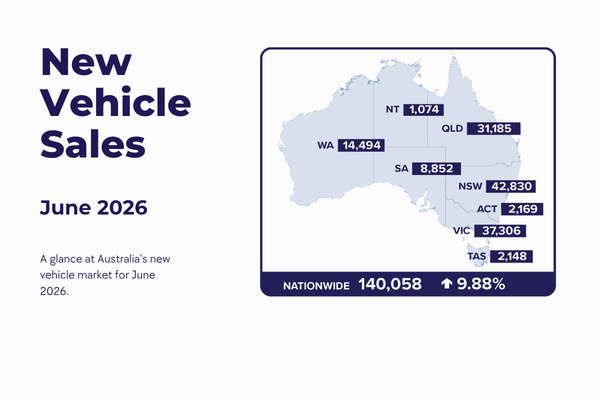
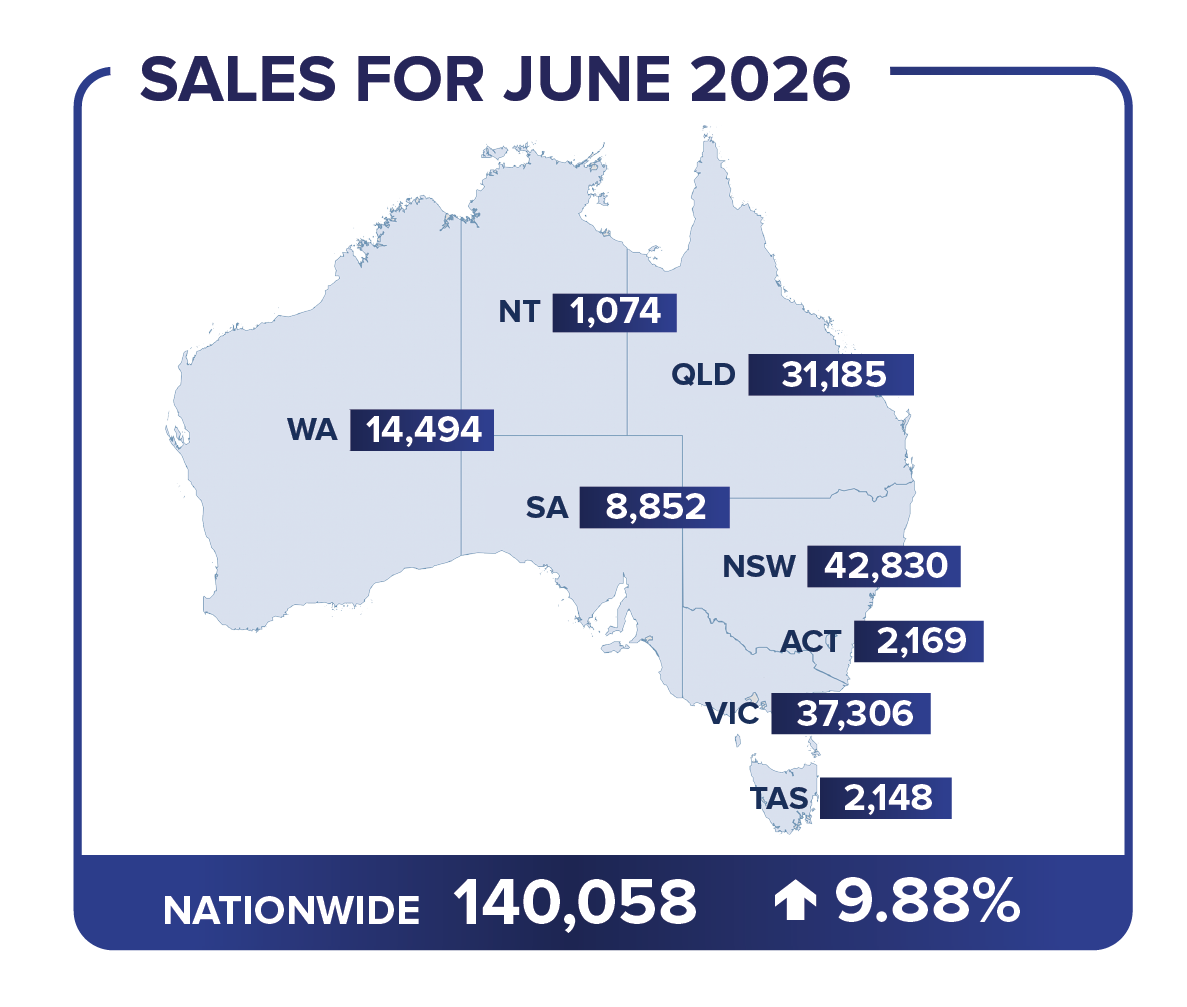
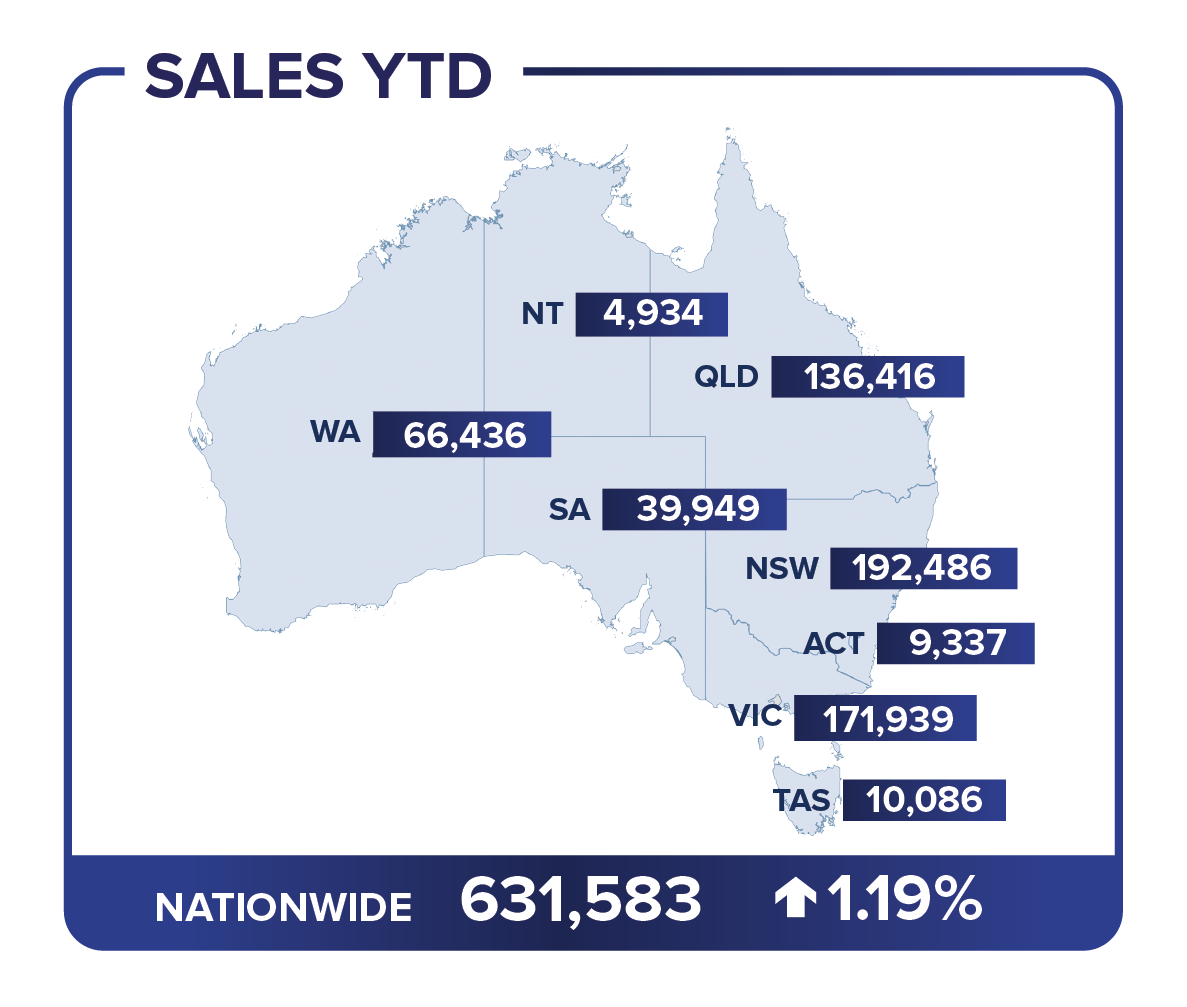
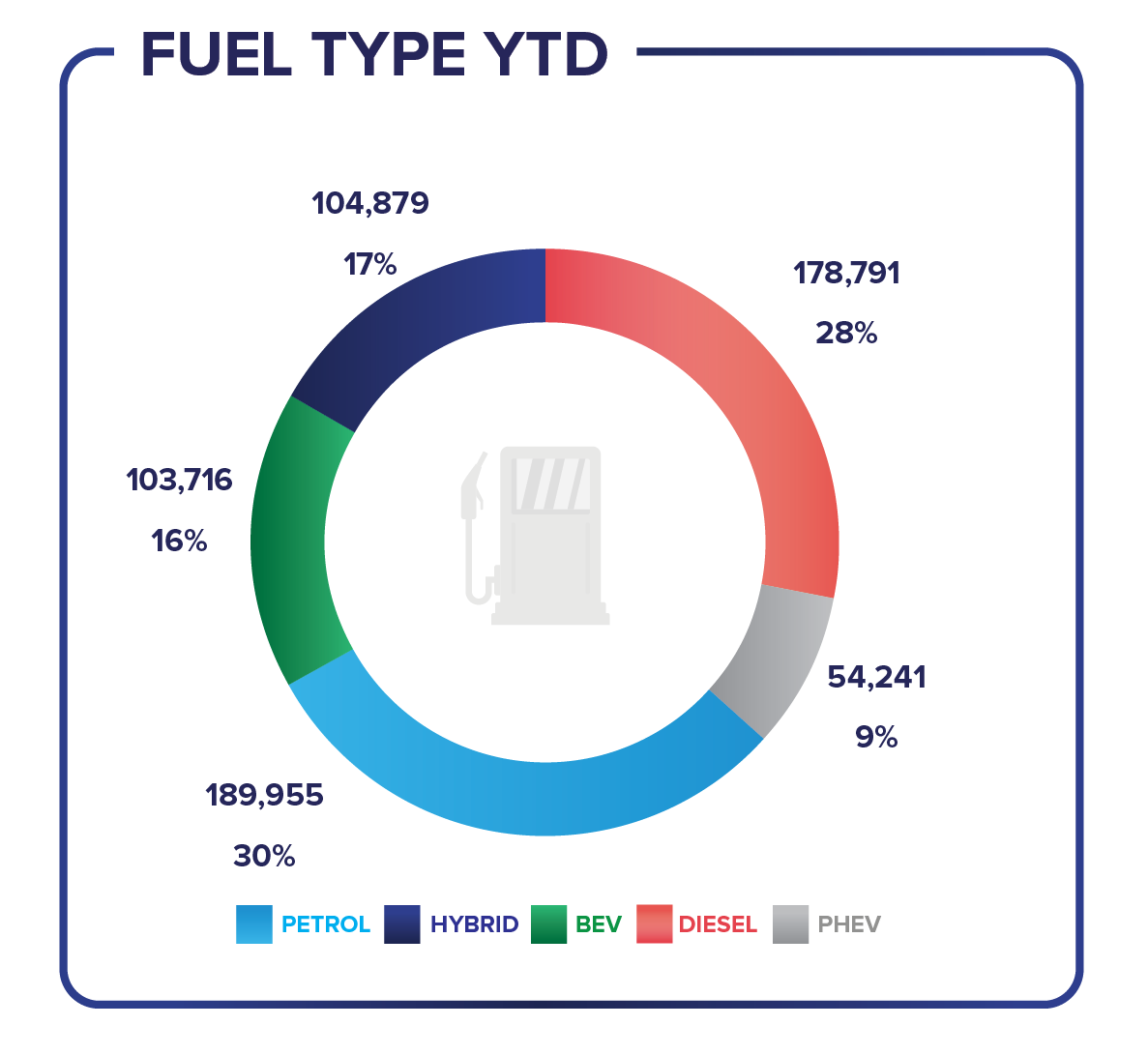
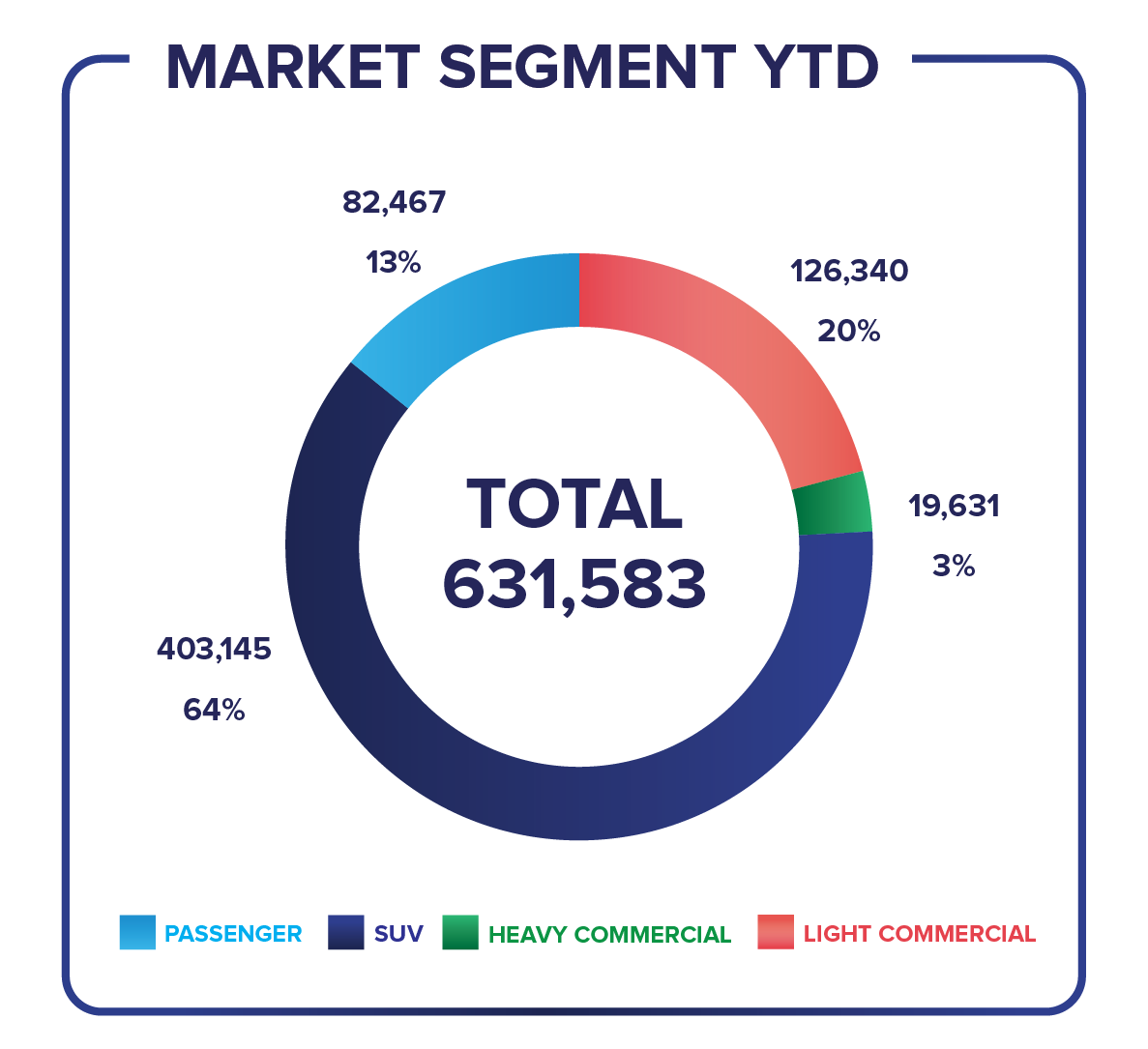
New vehicle sales in Australia totalled 140,058 units in June, up 9.88 per cent compared to the same month last year. Year-to-date sales increased by 1.19 per cent to 631,583 units.

The Australian new vehicle market recorded its strongest June on record, with many brands pushing significant volumes into the market during what is traditionally the busiest trading month of the year. Competition appeared strong across the industry as manufacturers sought to capitalise on end-of-financial-year demand.

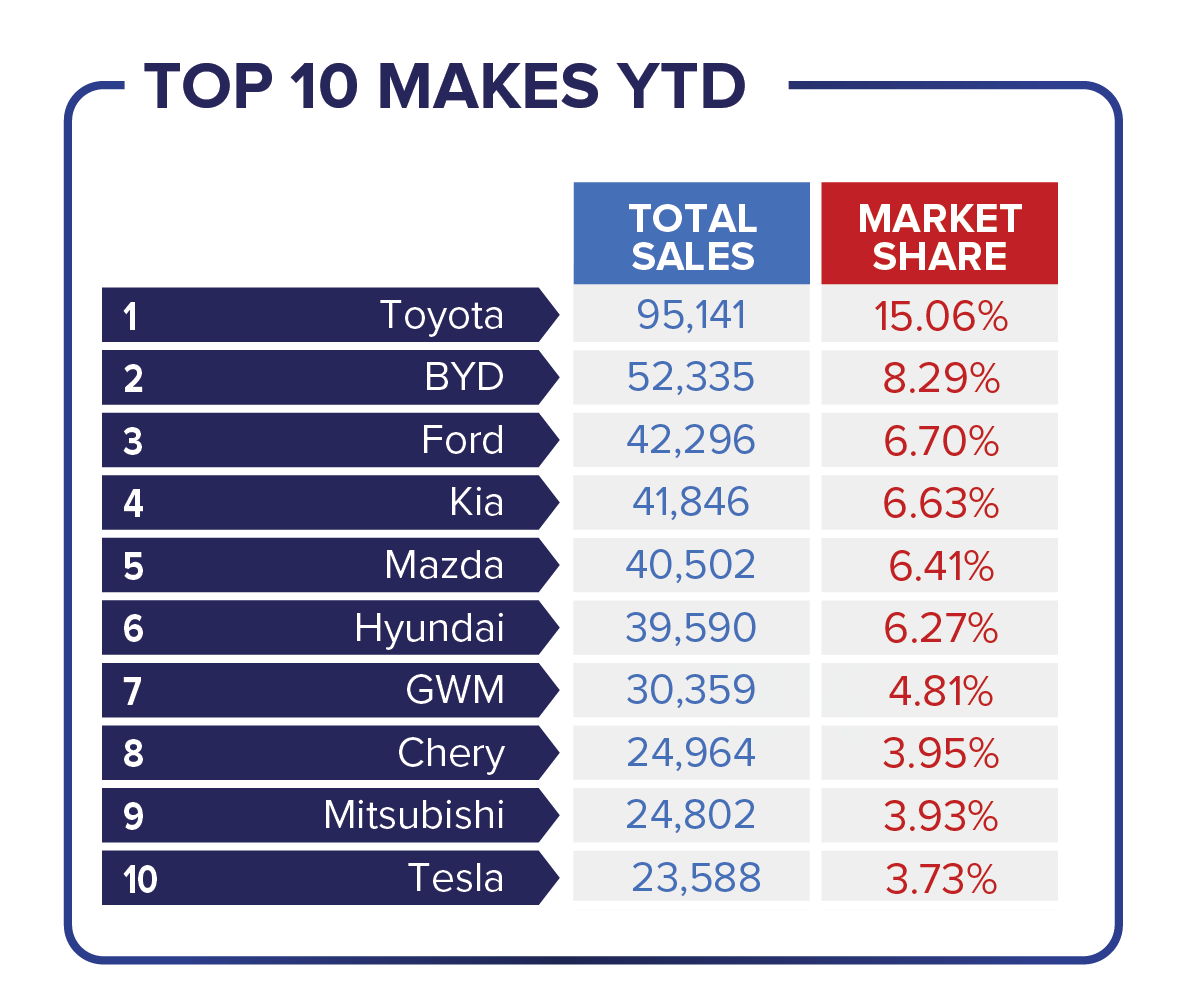
Battery electric vehicles recorded a strong month in June, overtaking hybrids and diesel to become the second most popular drive train behind petrol vehicles for the month. Toyota retained its position as market leader with 95,141 sales year to date, while BYD strengthened its hold on second place, ahead of Ford, Kia and Mazda.

SUVs remain the dominant vehicle type, representing 64 per cent of all new vehicle sales year to date. New South Wales recorded the highest sales volume in June with 42,830 vehicles sold, followed by Victoria (37,306 units) and Queensland (31,185 units).

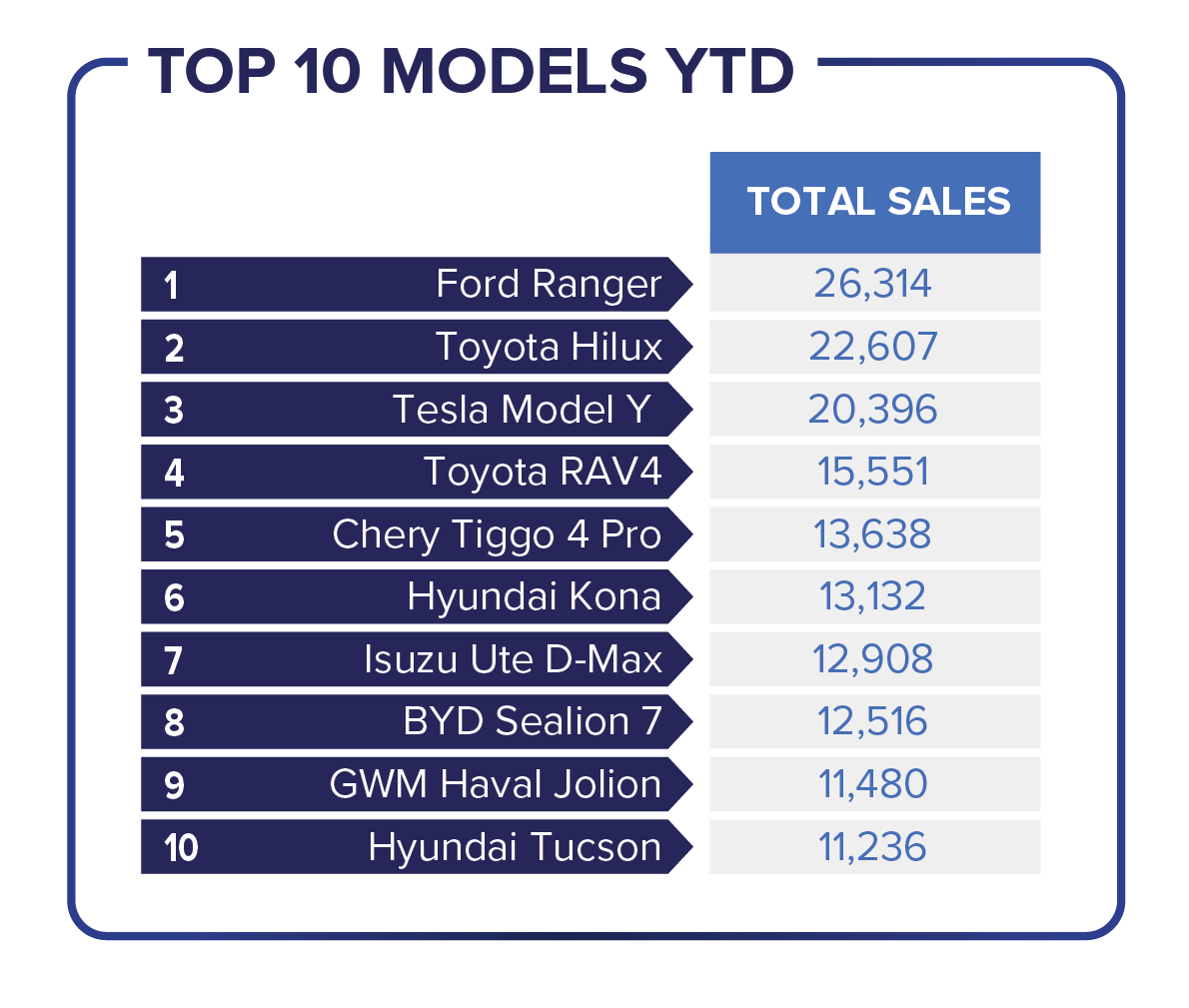
*The AADA has reviewed year-to-date VFACTS and EVC data, ranking vehicles by volume, and continues to analyse new vehicle sales by state, fuel type and market segments to monitor trends shaping the Australian market.

AADA Webinar: Lubricant Supply Outlook

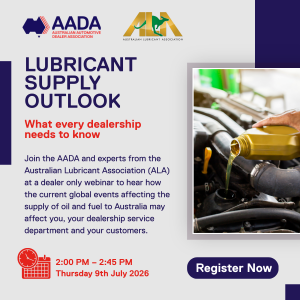
Join the AADA and experts from the Australian Lubricant Association (ALA) at a dealer only webinar to hear how the current global events affecting the supply of oil and fuel to Australia may affect you, your dealership service department and your customers. The ALA will provide a practical briefing on what dealers can expect in the months ahead with regards to supply and strategy.

Date: Thursday 9 July 2026

Time: 2:00pm – 2:45pm AEST

Presented by: Michael McKenna and Brian Savage from AADA, Joachim Sawkins, Jeremy van Kruining and Kyle Bender from the ALA.

Whether you are a service manager, dealer principal or manage a dealership group, this session will provide valuable insights to help your business prepare and respond effectively.

Webinars are open to all AADA dealer members and corporate members, so secure your spot today!

May 2026 New Vehicle Sales

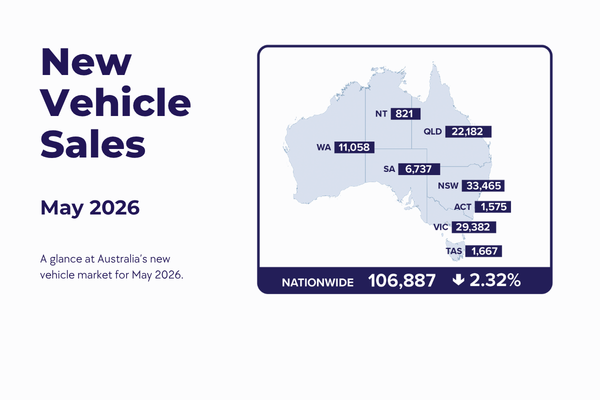
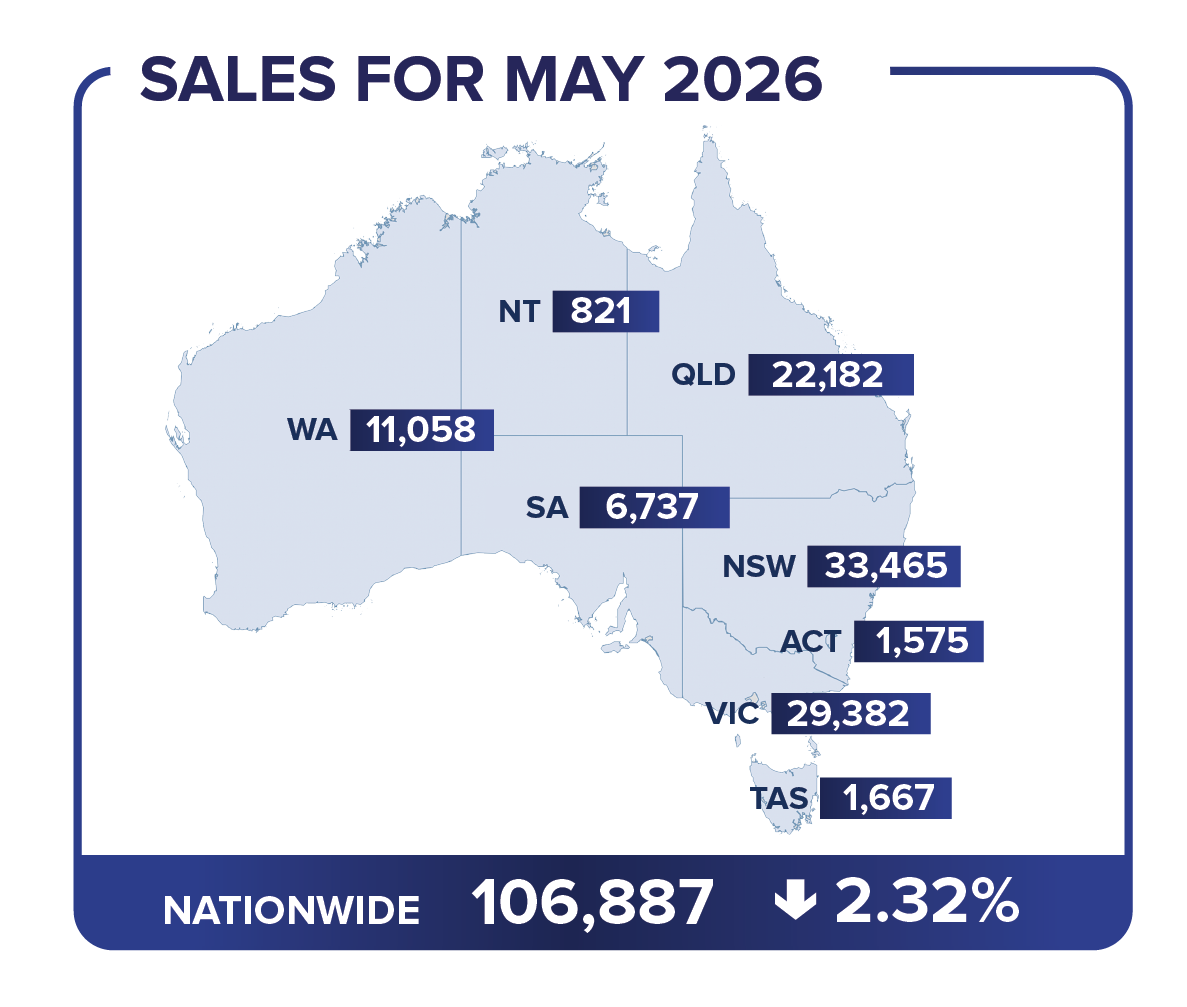
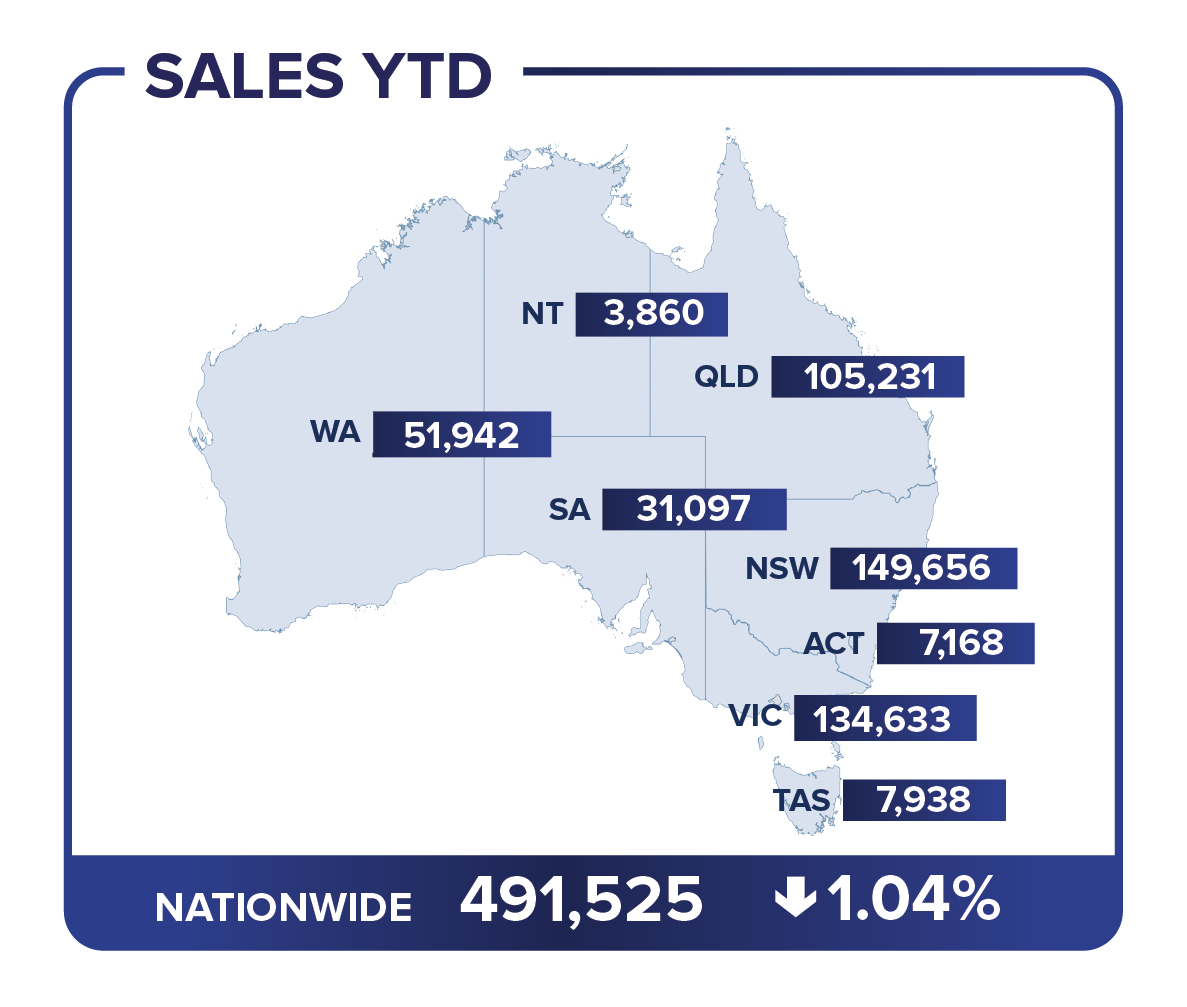
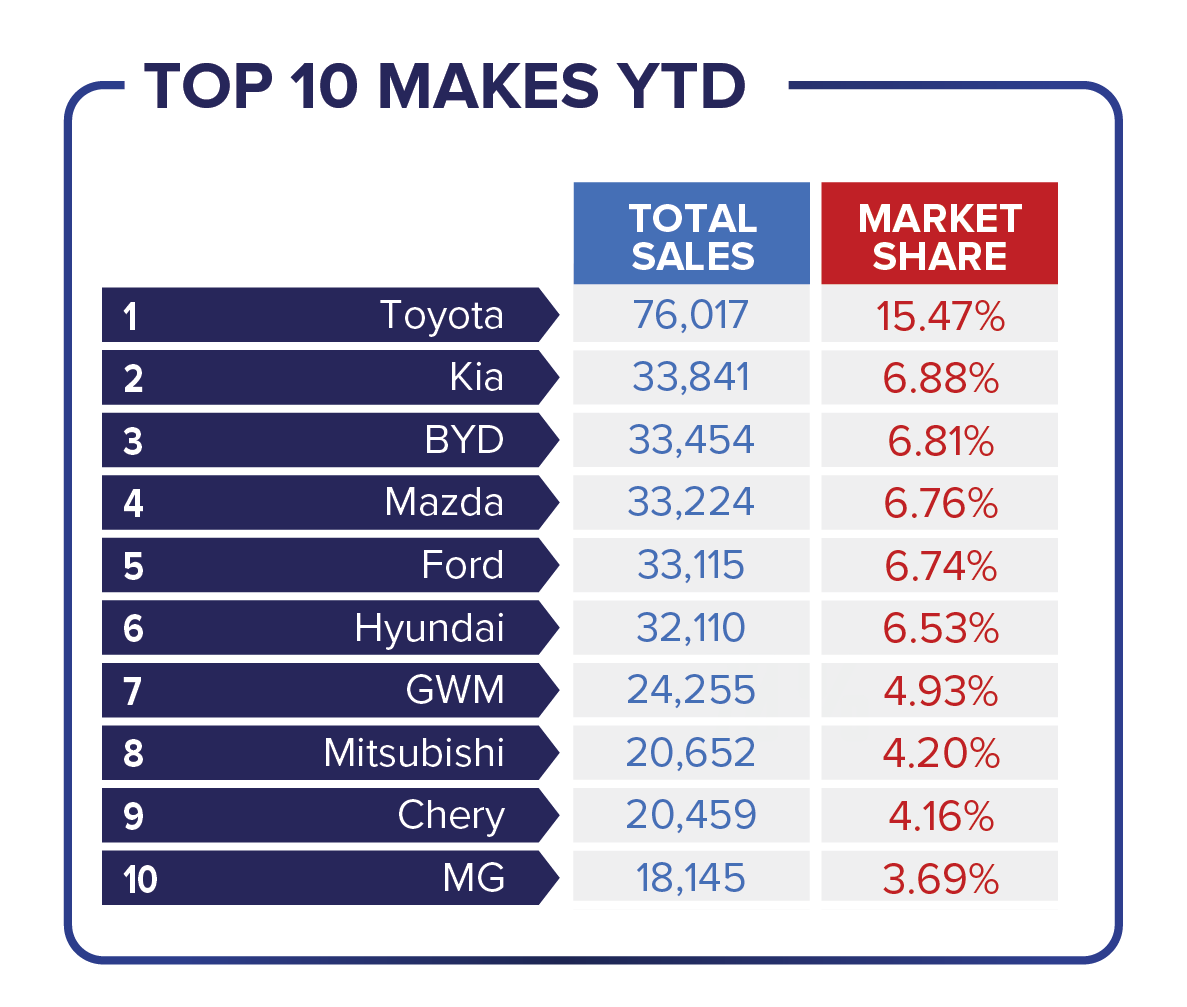
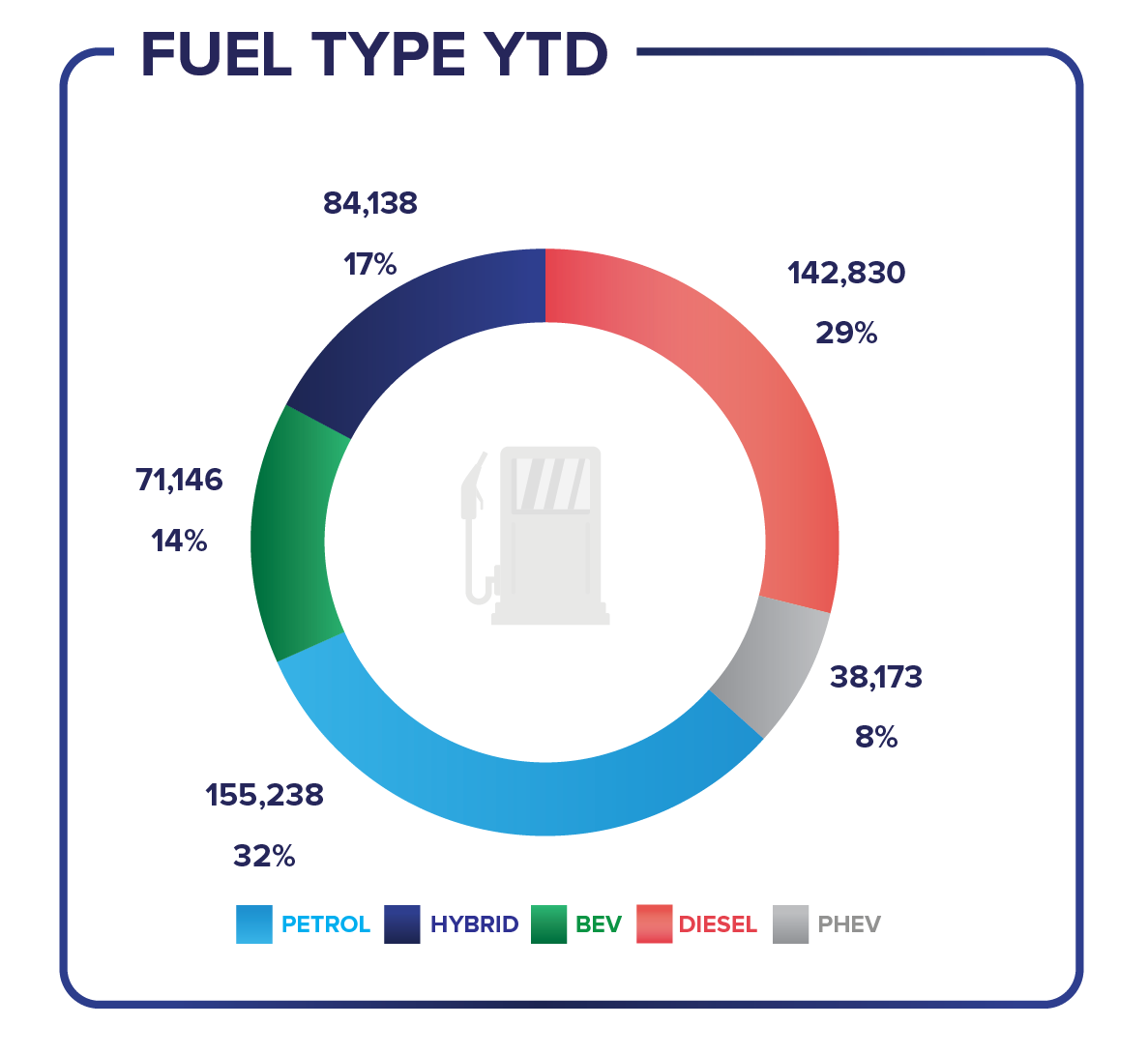
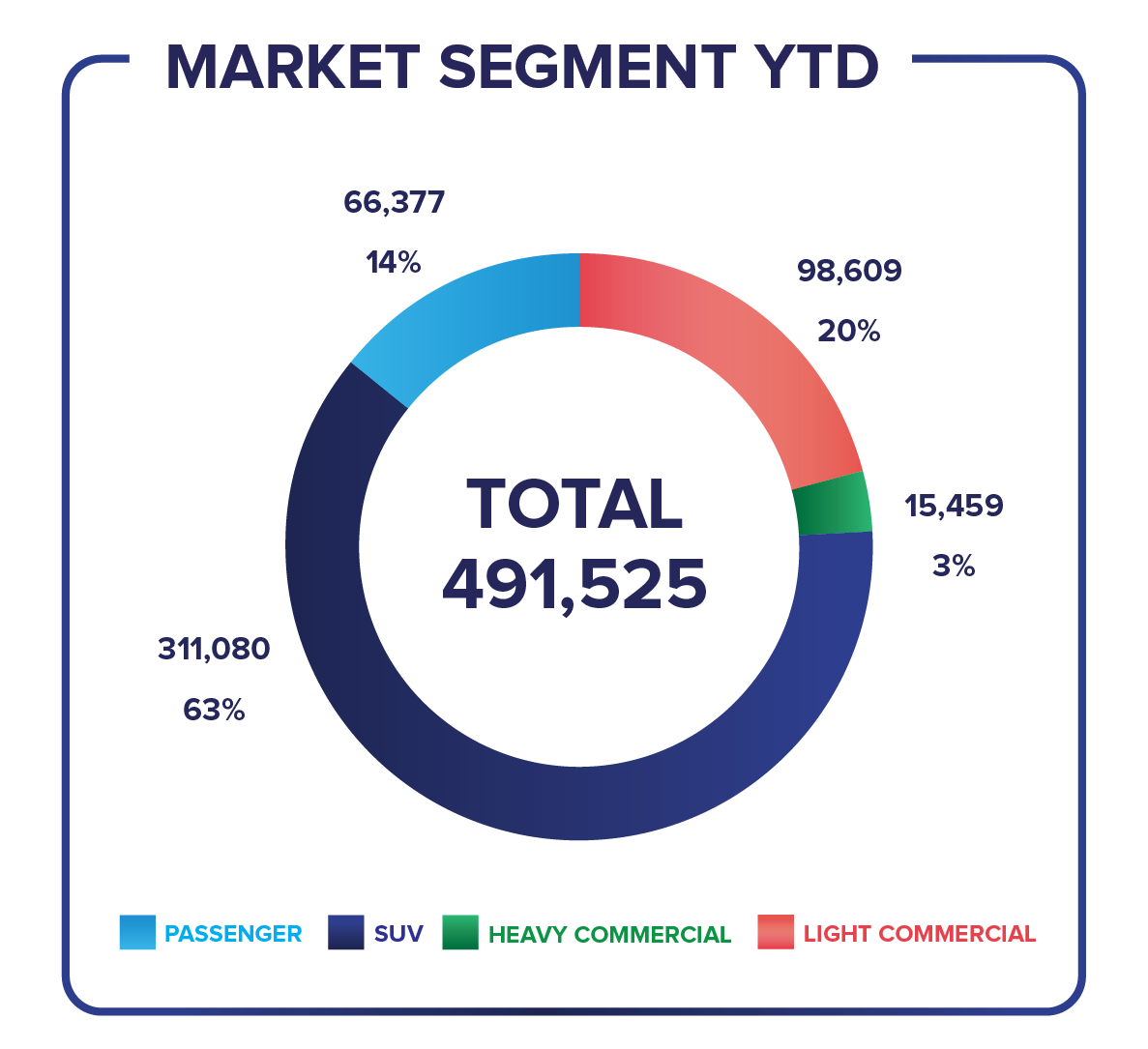
New vehicle sales in Australia totalled 106,887 units in May, down 2.32 per cent compared to the same month last year. Year-to-date sales declined by 1.04 per cent to 491,525 units.

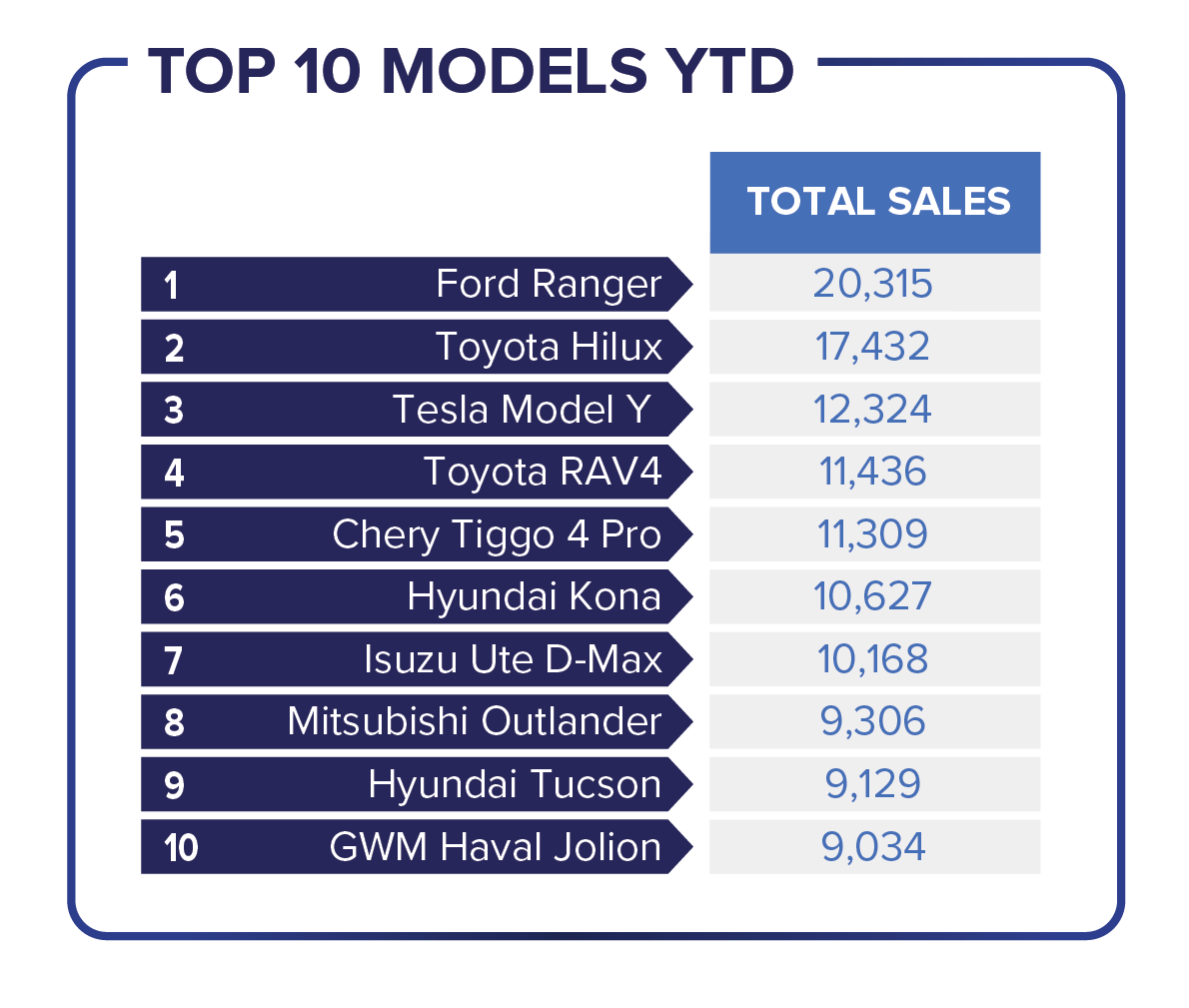
Electrified vehicles continued to gain momentum throughout May, accounting for 46 per cent of all new vehicle sales. Battery electric vehicles reached a record 20 per cent market share for the month, with the Tesla Model Y becoming the first EV to top Australia’s monthly sales charts, recording 5,606 deliveries ahead of the Ford Ranger and Toyota HiLux.

Toyota retained its position as the market leader year to date with 76,017 sales, while Kia and BYD occupied second and third respectively. SUVs remained the dominant vehicle type, accounting for 63 per cent of total sales. Across the states and territories, New South Wales recorded the highest sales volume in May with 33,465 units sold, followed by Victoria (29,382 units) and Queensland (22,182 units).

*The AADA has reviewed year-to-date VFACTS and EVC data, ranking vehicles by volume, and continues to analyse new vehicle sales by state, fuel type and market segments to monitor trends shaping the Australian market.

2026-27 Federal Budget

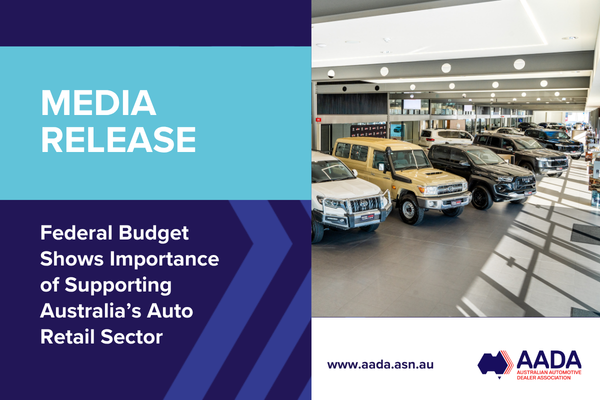
The Australian Automotive Dealer Association (AADA) says the 2026-27 Federal Budget comes at a time of heightened global economic uncertainty, ongoing cost of living pressures and a rapidly changing automotive market.

With more than 3,900 new car dealerships employing over 64,000 Australians nationwide, the AADA said this year’s Federal Budget will play an important role in supporting confidence and investment in Australia’s new car market.

While the Budget took a measured and fiscally restrained approach, the AADA commends the continued support of Australian dealers. The AADA is pleased the government has adopted the recommendations from our 2026-27 Pre-Budget Submission to expand the scope of the DRIVEN program in order to better meet industry needs.

The AADA also welcomes the extension of the DRIVEN program by an additional year out to 2029, with AADA CEO James Voortman stating that “this extension recognises the critical role dealers play as the consumer touchpoint in the EV transition and supports dealers while they continue to invest heavily in facilities, workforce capability and infrastructure”.

The AADA supports the Government’s recently announced changes to the Electric Car Discount, describing the reforms as a sensible adjustment to ensure the policy remains sustainable and accessible to everyday Australians.

Mr Voortman said the changes struck an appropriate balance between supporting EV uptake and maintaining long-term budget sustainability. “As the only demand-side incentive currently available to encourage EV uptake, these changes provide greater certainty for consumers, dealers and the broader automotive sector.”

The AADA recognised the Government’s ongoing commitment to addressing the long-standing power imbalance between dealers and global vehicle manufacturers, through $9 million to support the implementation of unfair trading practices (UTP) and consumer guarantee and supplier indemnification reforms.

“The franchised new car retail sector continues to operate in an increasingly complex environment characterised by margin pressure, rising costs and rapid brand expansion, as such, it is critical the regulatory framework evolves to provide fair protections for local businesses and consumers,” he said.

This is a challenging period for Australian dealers who are managing the impacts of evolving regulatory settings, including the New Vehicle Efficiency Standard (NVES), requiring substantial private investment at a time when business conditions remain challenging and policy settings continue to evolve. The AADA said broader economic conditions, energy policy and confidence to invest in business would remain critical issues for the sector over the next 12 months.

Australians Chase Lower Running Costs in Used Vehicles

Key Headlines

  1. Impacts of the Middle East conflict continues to influence buyer priorities. Heightened running cost considerations are pushing purchase decisions towards electrified vehicles.
  2. Used hybrid vehicles are the standout performer in used electrified stock. Demand is strong, supply is tightening, and values are holding across all model years.
  3. PHEV momentum is more uneven. The segment absorbed a fuel-driven demand surge in March, but stock velocity splits sharply by model and age.
  4. Chinese PHEV brands have entered the used market in volume. Brand openness among buyers is growing, but it is not yet universal.

Market Snapshot – Hybrid and PHEV

Australians are increasingly moving to electrified vehicles as rising fuel prices and cost-of-living pressures reshape buying behaviour, according to new market intelligence data from AutoGrab and the Australian Automotive Dealer Association (AADA).

While much of the public conversation continues to focus on EVs, which experienced a sharp surge in March 2026, the shift towards lower running cost vehicles has not stopped at EVs. The economic case for electrified options has become hard to ignore and reframed how buyers think about BEVs, PHEVs and hybrid vehicles.

Hybrids Lead the Electrified Market

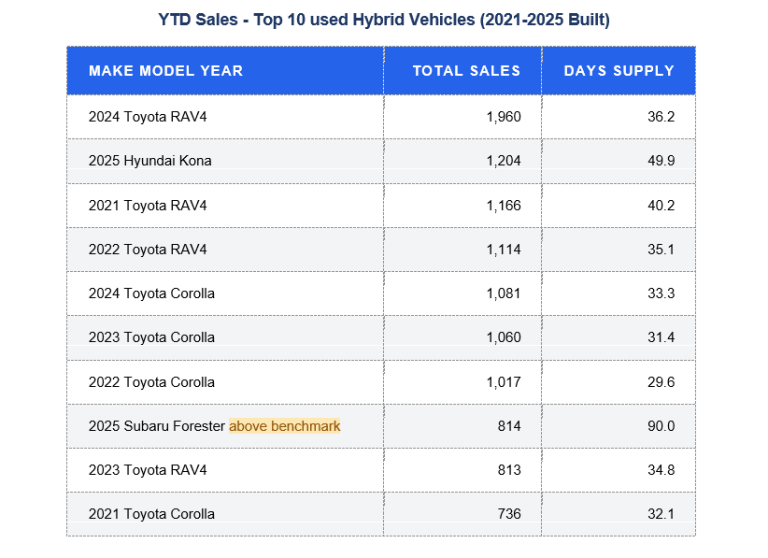
A total of 28,395 used hybrid vehicles were sold nationally between January and April 2026, representing 11.2 per cent of all used vehicle sales for 2021-2025 model year vehicles.

While EVs continue to dominate much of the public conversation around electrification, the data shows hybrids are a strong performing segment of the used electrified market, with buyers attracted to lower running costs without needing to change driving or charging habits.

Used hybrid supply tightened significantly during the first four months of the year, falling from 53.8 days supply in January to just 42.3 days in April – well below petrol and diesel vehicles, which both increased over the same period.

Toyota dominates the used hybrid market, with the Toyota RAV4 and Corolla accounting for eight of the top ten hybrid models by sales volume. Both vehicles recorded consistently strong selling times and tight stock levels, reinforcing Toyota’s position as the benchmark brand in Australia’s used hybrid market.

The analysis also found hybrid retained values remained exceptionally strong, with 2025 model year vehicles averaging more than 100 per cent retained value across the reporting period. Even 2021 model year hybrids retained an average 88.2 per cent of original purchase price.

PHEVs Gain Momentum as BYD Emerges

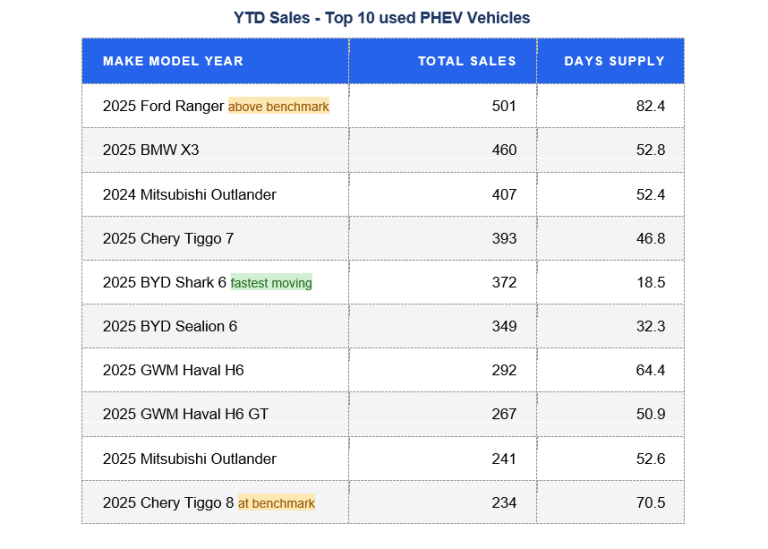
Used plug-in hybrid vehicle (PHEV) sales also strengthened during the period, with 7,536 vehicles sold nationally year-to-date, representing 3.0 per cent of used vehicle sales.

The segment experienced a sharp uplift in March as fuel prices surged, although demand varied significantly by brand and model.

Chinese brands are beginning to establish themselves in the used PHEV market, led by BYD. The 2025 BYD Shark 6 recorded just 18.5 days’ supply, the fastest-moving PHEV in the segment, highlighting particularly strong buyer demand.

However, the data shows the broader PHEV market remains uneven, with newer models performing strongly while older stock experience softer retained values and slower selling times.

General Market Statistics

  • The broader used vehicle market also remained active in April, with 343,021 vehicles listed for sale nationally, representing a 4.7 per cent increase month-on-month.
  • A total of 203,525 vehicles were sold during the month, down 8.7 per cent compared to March.
  • Dealer activity continued to account for a significant share of the market, representing 44.1 per cent of all used vehicle sales nationally.
  • Market efficiency also improved slightly, with average days to sell falling to 44.6 days, indicating continued resilience in transaction times despite softer overall sales volumes.

Reaction

Australian Automotive Dealer Association CEO James Voortman said the data showed Australians were increasingly prioritising practicality and affordability when choosing their next vehicle.

“The fuel price spikes earlier this year clearly pushed many buyers toward electrified vehicles, particularly hybrids and plug-in hybrids.”

“While EVs attract much of the attention, this data is a reminder that hybrids are playing a major role in Australia’s transition, because they offer lower running costs without requiring major changes to driving habits or charging behaviour.”

“The retained value figures for hybrids are particularly remarkable and are one of the clearest indicators of genuine consumer demand we have seen in the used vehicle market.”

AutoGrab Chief Commercial Officer Saxon Odgers said heightened running cost considerations, in part precipitated by the Middle East conflict, has boosted the economic case for Australians to choose electrified transport as their next vehicle purchase.

“Used vehicle data in the Australian market points to a discernible shift towards electrified transport options, in a timeframe compressed by external factors and an increasingly dynamic marketplace.”

“Used hybrid supply tightened from 53.8 to 42.3 days between January and April, while petrol and diesel inventory moved in the opposite direction. That gap is a clear signal of where buyers are spending.”

For more detailed market analysis beyond the national snapshot, including state-level insights and additional market segmentation, visit AutoGrab AIR Pro for further information.

Dealers Call for Practical Reforms Ahead of Federal Budget

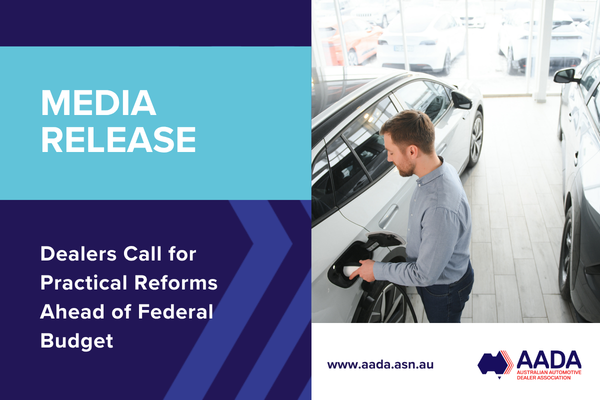
The Australian Automotive Dealer Association (AADA) has used its 2026–27 Pre-Budget Submission to call for a series of targeted, low-cost reforms to improve efficiency and fairness, and support the transition to electric vehicles across Australia’s automotive retail sector in challenging economic times.

With more than 3,900 new car dealerships nationwide, the AADA says the upcoming Federal Budget presents a key opportunity to address regulatory bottlenecks and ensure policy settings reflect the realities of the retail automotive industry.

The AADA is calling on the Albanese Government to expedite commitments to reform franchising protections for Australia’s new car dealers. Australia’s franchising framework, with longstanding power imbalances between dealers and multinational manufacturers, is currently not appropriate to respond to the current pace of the transition to electric vehicles. With the introduction of many new brands in the Australian market, this poses many risks to businesses, consumers and the transition to low emission vehicles without proper protections in an open market such as Australia.

“Franchised dealers operate in a system where the balance of power is heavily weighted towards global manufacturers,” an AADA spokesperson said.

“Strengthening protections against unfair trading practices and extending unfair contract terms laws to all franchisees are critical steps to ensuring a fair and sustainable operating environment.”

The submission is also calling for an expansion of the Government’s Dealership and Repairer Initiative for Vehicle Electrification Nationally (DRIVEN) program to better support dealers on the frontline of Australia’s EV transition.

“Expanding this program presents an opportunity to better meet the demands of the surge in low emission vehicle purchases in recent months,” the spokesperson said.

“Dealers are the primary point of contact for consumers, and targeted investment in infrastructure, training and education at the dealership level will be critical to sustaining momentum in EV uptake.”

Another key priority is improving the operation of the Personal Property Securities Register (PPSR), where delays in removing finance encumbrances are creating unnecessary costs and holding up vehicle sales.

“Delays in clearing PPSR registrations are a daily frustration for dealers and consumers alike.”

“Our data shows 71 per cent of dealers using the system experience delays beyond the mandated five-day timeframe, which creates avoidable inefficiencies and slows down transactions.”

“This is a simple fix – ensuring timely removal of registrations and reviewing repeat search fees would deliver immediate productivity gains across the industry.”

“This is about getting the policy settings right and removing friction where it exists. The AADA believes the budget should be backing the businesses that are delivering for Australian consumers every day.”