Federal Court Appeal Decision Rocks New Car Dealers

The Australian Automotive Dealer Association (AADA) and Mercedes-Benz dealers across the country are bitterly disappointed by today’s decision by the Federal Court to dismiss their appeal and to find in favour of Mercedes-Benz AG.

Commenting, AADA CEO James Voortman, said:

“Australian dealers have been fighting to stop Mercedes-Benz using their power over franchised dealers to force them into one-sided business relationships. Today’s decision is a significant blow to that fight which will have detrimental effects on Australia’s franchising sector.”

“In handing down today’s decision, there is now a clear need to protect Australian franchisees against unfair treatment from franchisors to arbitrarily change business models with no compensation.”

“The presiding Judge in the original court decision clearly articulated the need for further amendments to the Franchising Code to protect the investments dealers make in their businesses.”

“The Australian automotive industry is currently going through a major transition with the move to electric vehicles. This transition will require massive amounts of dealer investment in infrastructure and servicing to ensure consumers have the confidence to purchase an electric vehicle.”

“Today’s decision confirms that current laws in Australia do not adequately protect new car dealers against unfair conduct and particularly are not being supported against unfair decisions being made in head office overseas. It is imperative that the Federal Government moves at speed to implement the commitments it made in the election to protect franchisees against unfair contract terms and unfair trading practices.”

This decision comes on the back of Holden dealers losing their legal action against General Motors (GM) this year where the Judge found that there was no obligation by GM to supply vehicles to Australian dealers under their franchising agreement.

The AADA will advocate directly to the Federal Government to move with haste to ensure that all automotive franchisees are appropriately protected, so that the blueprint created by this court decision is not used by others.

DOWNLOAD MEDIA RELEASE


About the Court Action

  1. Motor vehicle dealers operate over 3,700 dealership sites in Australia, and employ more than 68,000 workers directly and indirectly in sales of new and used cars, and in provision of service and parts.
  2. They are a small business success story in every Australian city, regional centre and town. Almost all dealerships started from the investment by a single individual or family, and over time some of the dealers have become large public and private company operating multiple brands and sites.
  3. The dealership model is under threat from the risk of unrestrained profit grabs by the large, overseas car manufacturers (OEMs) at the expense of Australian dealers, workers and consumers. This risk arises because there are loopholes in the Australian Franchising Code, that were exposed in a recent Federal Court judgment involving the Mercedes-Benz dealers which the dealers lost.[i]
  4. On 1 January 2022, Australia was one of the first countries to implement a new ‘agency’ model, for Mercedes-Benz globally, under its ‘Retail of the Future’ strategy.[ii] The dealers consistently opposed that model, having voted in December 2019 against the new model 51-4.[iii]
  5. Under the ‘agency’ model, Mercedes-Benz rather than the dealers is the legal seller of all new Mercedes-Benz cars in Australia, thus transferring all retail profits from the dealers to the OEM. The dealers’ new role is that of commission agent, with the original court decision Justice Beach finding that Mercedes-Benz set the commission rates to enable dealers to break even on their new car sales, by covering the dealers’ marginal costs of operation only.[iv]
  6. Justice Beach in the original decision also found at paragraph [390] that the modelling done for Australia, by the Mercedes-Benz Finance staff in Stuttgart, was seen ‘as a source of experimentation to see how low the [Dealers’ Return on Sales] could be pushed by lowering agency commissions. Australia and possibly one other country seem to have been the subject of the most cutting so to speak.’
  7. However, rather than buying out the dealers’ investments to run a centrally controlled sales system, Justice Beach concluded that Mercedes-Benz backed the dealers into a corner.[v] They did this by terminating their existing dealership agreements, by non-renewal notices, and then offering the dealers a choice of either closing their dealerships or signing up to the new ‘agency’ agreements prepared by Mercedes-Benz.[vi]
  8. Justice Beach also found that there was no meaningful negotiation of the financial terms by Mercedes-Benz, which only made concessions on ‘rats and mice issues’.[vii] Mercedes-Benz rejected the dealers’ requests for compensation, and provided a two-year ‘safety net’ which Justice Beach found was not compensation, but was designed to address transition issues.[viii] After considering the expert evidence, Justice Beach concluded that the dealers were materially worse off under new ‘agency’ agreements, and that Mercedes-Benz was substantially better off at the expense of the dealers.[ix]
  9. Ultimately this loss of dealer profit will translate into less future investment by the dealers, a diminished network of dealers, job losses and higher vehicle prices for consumers as competition is removed from the market. As the Mercedes-Benz case shows, Australia’s loss is Germany’s gain.[x] Applied across the whole of the industry, the AADA is concerned that restructuring by stealth will leave the Australian marketplace in a very weak and uncompetitive position in future years to the detriment of businesses, workers, and consumers.


[i] AHG WA (2015) v Mercedes-Benz Australia/Pacific Pty Ltd [2023] FCA 1022, Beach J, 30 August 2023 (“Judgment”), https://www.judgments.fedcourt.gov.au/judgments/Judgments/fca/single/2023/2023fca1022

[ii] Judgment, paragraphs [1768], [1771], [2092]

[iii] Judgement, paragraphs [2], [1625].

[iv] Judgment, paragraph [2658].

[v] Judgment paragraph [2184].

[vi] Judgment, paragraph [2177].

[vii] Judgment, paragraph [245].

[viii] Judgment, paragraph [1797]. The transition issue was the possibility of an X% decline in Mercedes-Benz’ competitive market share as a direct result of the transition to an agency model – see Judgment, paragraph [907].

[ix] Judgment, paragraphs [2377],  [3577], [3593].

[x] Judgment, paragraph [2267] shows how Mercedes-Benz could generate extra profits by raising prices from the ‘former transaction price’ to the ‘optimised fix price’, including by eliminating intra-brand competition.

Used Car Prices Ease as EOFY Deals Drive Strong Sales

The Australian Automotive Dealer Association (AADA), in partnership with AutoGrab, have released the June 2025 Automotive Insights Report, which saw an end-of-financial-year (EOFY) lift in used vehicle sales activity even as retained values begin to soften across most segments.

Key insights from June include:

  • EOFY drives strong sales growth: National used car sales surged to 212,136, up 10.1 per cent month-on-month. Significant increases were recorded in NSW (12.5 per cent), QLD (11.7 per cent), and VIC (9.1 per cent).
  • Dealer activity remains strong: Dealers accounted for 49 per cent of sales and 53.6 per cent of listings. The dealer share of inventory continues to lead, reflecting strategic stock positioning and ongoing consumer confidence in dealer-backed purchases.
  • Hybrid and EV momentum continues: Hybrid sales climbed 21.7 per cent month-on-month, PHEVs increased 29.3 per cent, and EVs rose 7.6 per cent, despite a 6 per cent drop in EV listings. The shift reflects increasing consumer demand for fuel-efficient vehicles.
  • Days to sell remains stable: Average days to sell across all used vehicles held steady at 47.0 days, consistent with May, suggesting sustained consumer engagement as stock levels increased slightly by 1.2 per cent to 330,278 listings nationally.

“EOFY always drives sales activity, but it also tends to put downward pressure on retained values. We saw the same pattern in June last year in that buyers are motivated, but so are sellers keen to close deals before the books close.”” said AADA CEO James Voortman.

“Hybrid and EV sales are continuing to build momentum, showing strong consumer interest in fuel-efficient vehicle despite broader market fluctuations,” he said.

“The pressure on retained values is something dealers will need to factor in when setting margins and managing stock. It’s encouraging to see hybrid and EV sales continue to build momentum, but pricing volatility remains a key watch-point heading into the second half of the year,” Saxon Odgers, Chief Commercial Officer at AutoGrab said.

Southern NSW and Eastern Victoria Tour

During June the AADA team conducted a wide-reaching regional tour across Southern NSW and Eastern Victoria, engaging directly with dealers to discuss the evolving challenges and opportunities facing the automotive retail industry.

The visit began in the ACT with a working lunch in Canberra with David Smith MP, Federal Member for Bean. The discussion focused on the impact of the New Vehicle Efficiency Standard (NVES) and the broader issue of rising business costs in the ACT. We thank Mr Smith for his time and his attentiveness to the concerns of local dealers.

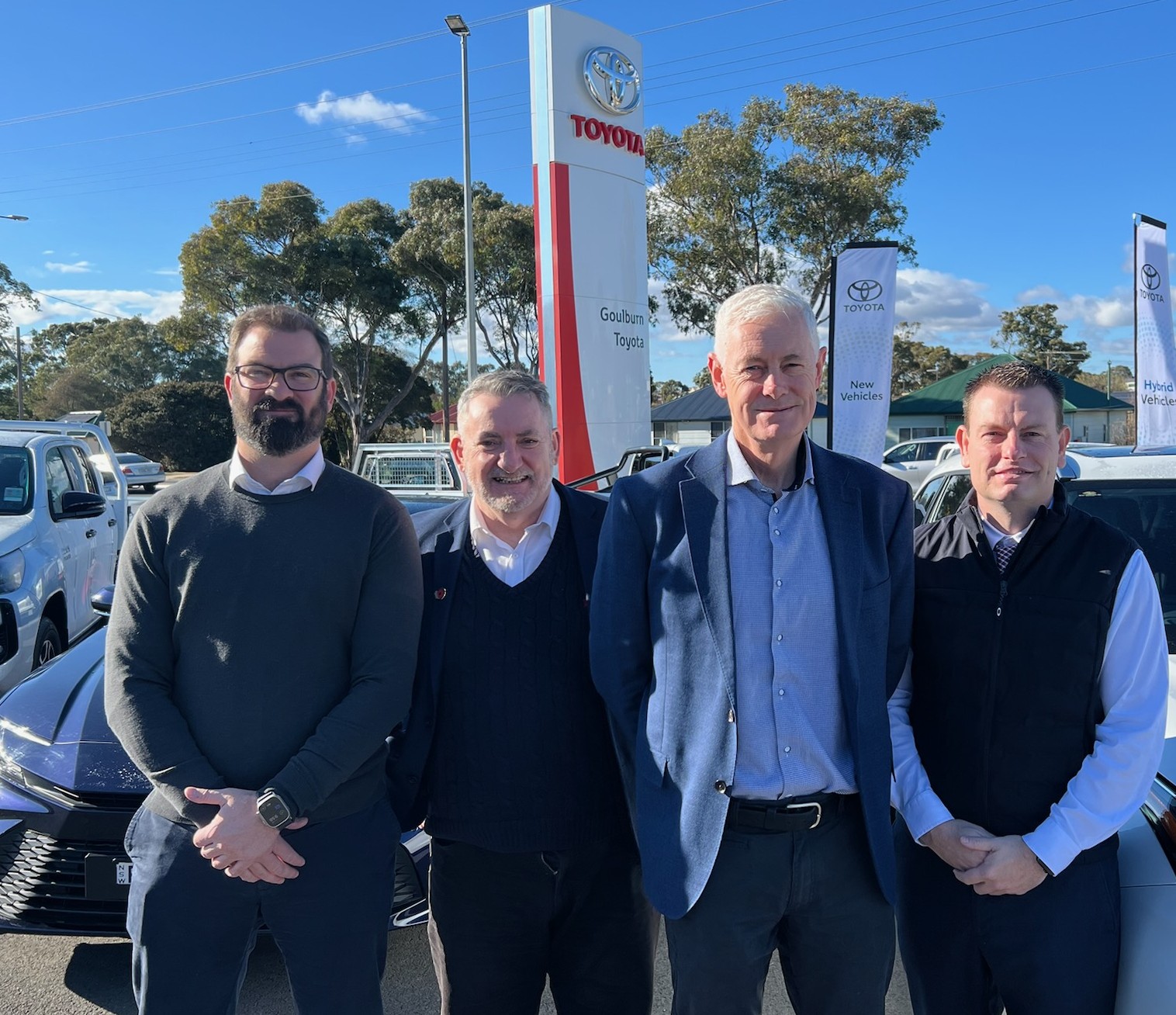
From Canberra, the AADA team travelled through Goulburn and the Snowy Valleys, stopping in at Goulburn Toyota and Goulburn Mazda to meet with Dealer Principal David Albrighton, and then to Tumut Toyota, where owner Tim O’Malley showcased a business that is not only a strong local employer but also deeply embedded in the community through its support of local sports and service organisations.

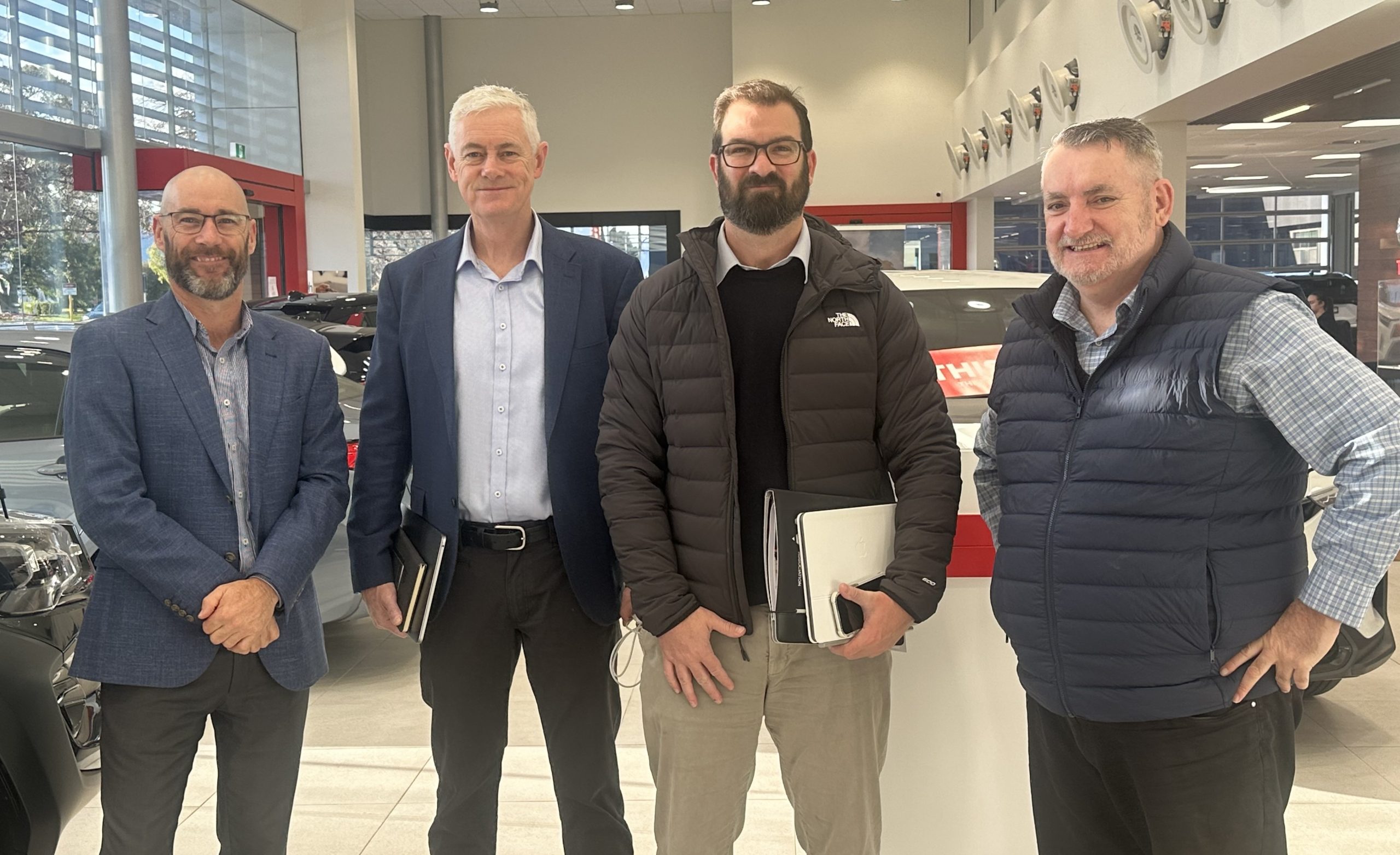
In Albury-Wodonga, the team was hosted at Jacob Toyota’s impressive new facility, where a well-attended regional briefing was held. We thank Dean and Neville Jacob for their hospitality and leadership within the local dealer network, which employs over 600 staff. While in the area, we also met with Michael Dixon from Blacklocks Ford.

The day concluded in Wangaratta with a visit to Ovens Ford and Ovens Kia, meeting with Dealer Principal Ashley McIlroy from Value Auto Group, before heading into Victoria for the next leg of the tour.

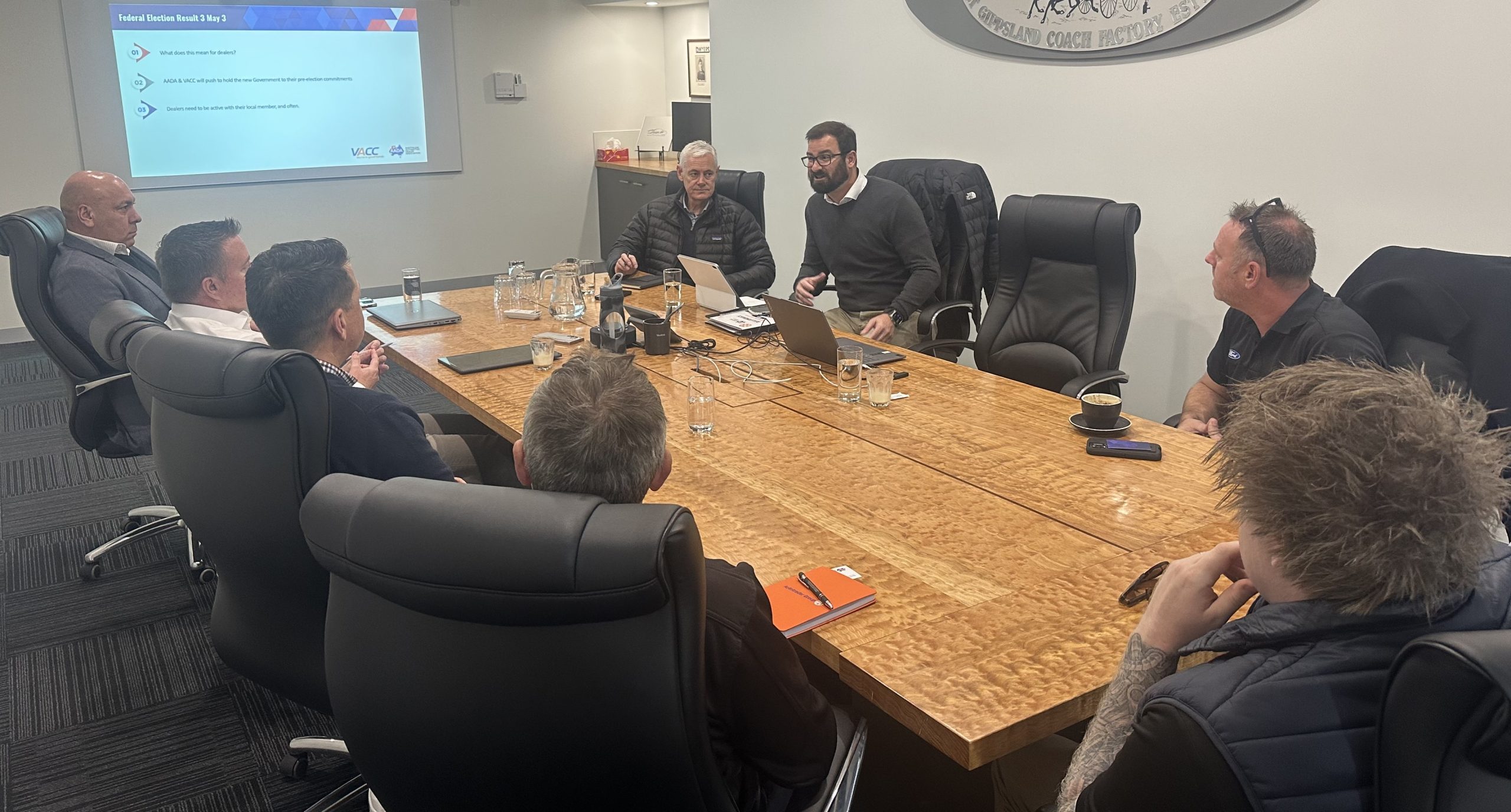
The second half of the trip focused on Gippsland and south-east Victoria, conducted in partnership with the Victorian Automotive Chamber of Commerce (VACC) under the organisations’ recently signed Memorandum of Understanding. 

In Bairnsdale, we were hosted by Anthony Dwyer at Dwyers Toyota and Bairnsdale Mazda, followed by a tour of The Big Garage with Dealer Principal Darren Robbie. The team continued to Sale for a dealer lunch hosted by Anthony Cefala of King-Church Motors and Ross Nicholas of Sale Ford.

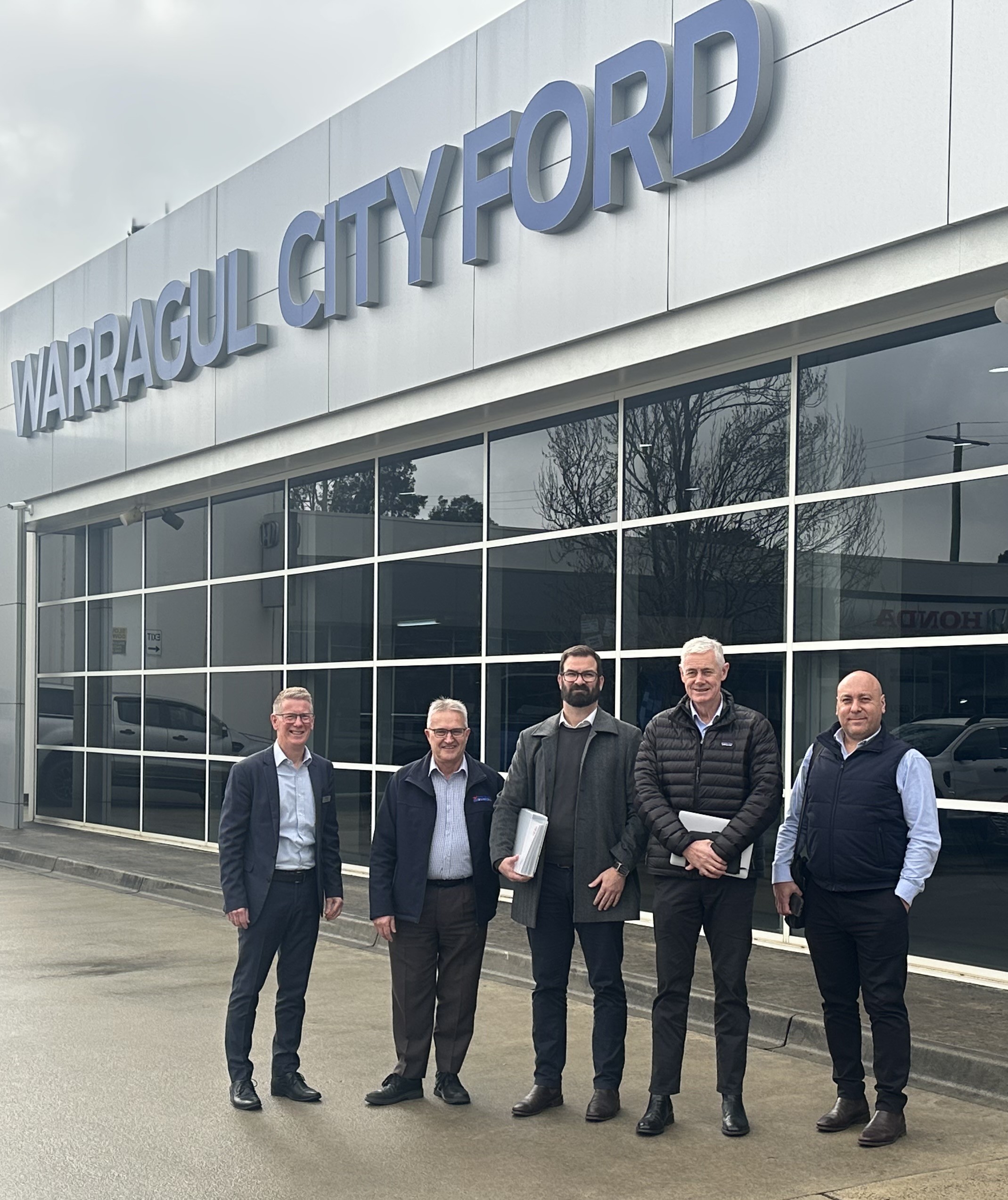
That evening in Traralgon, we held a dealer meeting at Traralgon Toyota, with thanks to Gary Shannahan for hosting and joining the team for dinner. The tour concluded in Warragul with a dealer briefing at Warragul City Motors, hosted by Shaun Donaldson and Craig Emery, and a final working lunch in Pakenham with Paul Clough of Pakenham Mazda.

Across both regions, common themes emerged in our conversations with dealers. Key issues raised included regulatory changes, workforce shortages, growing concerns around profitability in the EV space, enforcement of Australian Consumer Law, and ongoing challenges relating to OEM and third-party practices.

AADA thanks all participating dealers for their time and insights, and VACC for their support throughout the Gippsland leg. These regional visits are a vital part of our advocacy work, ensuring that dealer voices continue to shape the national conversation.

Used Car Sales Rebound in May

The May 2025 edition of the Automotive Insights Report (AIR), produced by the AADA in collaboration with AutoGrab, shows a rebound in used car sales, increasing by 5.4 per cent to 192,692 units, while used car listings also increased by a similar margin, indicating a stable balance between supply and demand.

“The observed increase in listings may be partly attributed to end-of-year discounts being offered in the new car market, prompting more people to upgrade their vehicles and boosting the supply of used cars,” said AADA CEO James Voortman.

“Across the vehicle segments, SUV remains the most popular vehicle of choice, experiencing the highest jump in sales, up 7.9 per cent to 83,442 units compared to April 2025,” he said.

“Average days to sell dropped to 47.6 days, the lowest this year, suggesting improved stock turnover,” said Mr Voortman.

“Used car sales rose across all states but the Northern Territory, which experienced a notable drop in sales, down 12.4 per cent to 648 units,” he said.

“Used EVs, in particular, experienced significant growth, increasing by 37.5 per cent in May 2025 compared to 8.4 per cent in April this year, suggesting a strong shift in consumer preferences toward cleaner vehicles,” said Mr Voortman.

Small vehicles in the passenger segment continue to lead in value retention, with the Audi RS3 replacing the Ford Mustang, at 105.8 per cent in the 2-4 year old age category. Japanese car maker Toyota maintains top position in the 5-7 year age bracket, with the Toyota Vitz at 100.3 per cent. The Suzuki Jimny continues to remain unbeatable in the 2-4 year old SUV category at 111.8 per cent.

Highlights from the AIR for May 2025:

  • 192,692 used cars sold nationally – a 5.4 per cent increase from April.
  • Total listings were up 5.2 per cent, with the Northern Territory being the only outlier.
  • EV sales experienced significant growth, rising by 37.5 per cent to 3,552 units.
  • Average days to sell dropped to the lowest point this year – 47.6 days.
  • The Suzuki Jimny maintains top retained value position in the 2-4 year old SUV category at 111.8 per cent.
  • Ford Ranger and Toyota Hilux continue to top the dealer sales list.
  • In EVs, Tesla Model 3 and Tesla Model Y were the top picks once again.

Webinar: The New Statutory Privacy Tort – What it Means for Dealers

AADA is pleased to be offering members another timely and practical webinar, this time tackling a significant legal development that will impact all dealerships. With privacy and data protection now squarely in the spotlight, this session will equip dealers with the knowledge they need to stay compliant and safeguard their businesses.

Title: The New Statutory Privacy Tort – What It Means for Dealers

Date: Thursday 26 June 2025

Time: 1:00pm-2:00pm AEST

Presented by: Sotheary Bryant and Bill Fragos from Moray & Agnew

The new statutory tort for serious invasions of privacy, will be effective from 10 June 2025.   

Under this new law, a customer may sue a dealership and seek damages or an injunction if there has been a misuse of their information or an intrusion on their privacy.

All dealerships collect, hold, disclose and use personal information about customers. Many dealers use data driven solutions to develop insights about customers, to market to them and to engage with them. Dealers also share customer information with their OEMs and give access to their databases to third party service providers.

The volume of customer data in dealerships means dealers must have strong privacy and data protection governance to limit risks of unintended disclosure. We will share some practical and simple things dealers can do to protect their dealerships.

Webinars are open to all dealers and their staff, so secure your spot today!

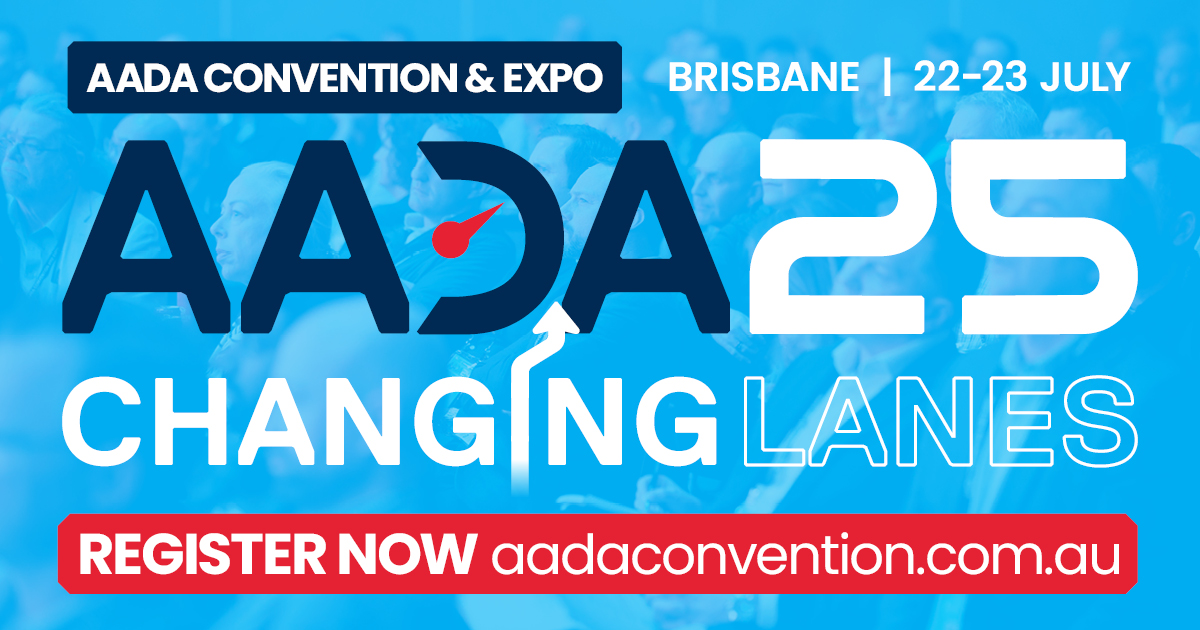
Why AADA 2025 Is the Can’t Miss Event of the Year 

The 2025 AADA Convention & Expo is fast approaching – and with the theme ‘Changing Lanes’, this year’s event is all about embracing transformation and charting a smarter course forward for automotive retail. 
 
Happening at the Brisbane Convention & Exhibition Centre on Tuesday 22 and Wednesday 23 July, AADA 2025 is set to deliver two dynamic days of forward-thinking content, hands-on workshops, and invaluable industry networking. From AI integration and digital retail strategy to policy reform and performance leadership, this year’s program is built to equip dealers with the tools and insights they need to stay competitive in a rapidly evolving landscape. 
 
With keynote sessions, feature panels, and an expansive Expo floor, AADA 2025 is where conversations spark action – and the future of the industry takes shape. 
 
Don’t miss your chance to be part of it. Explore the full program and register below.

New Vehicle Sales May 2025

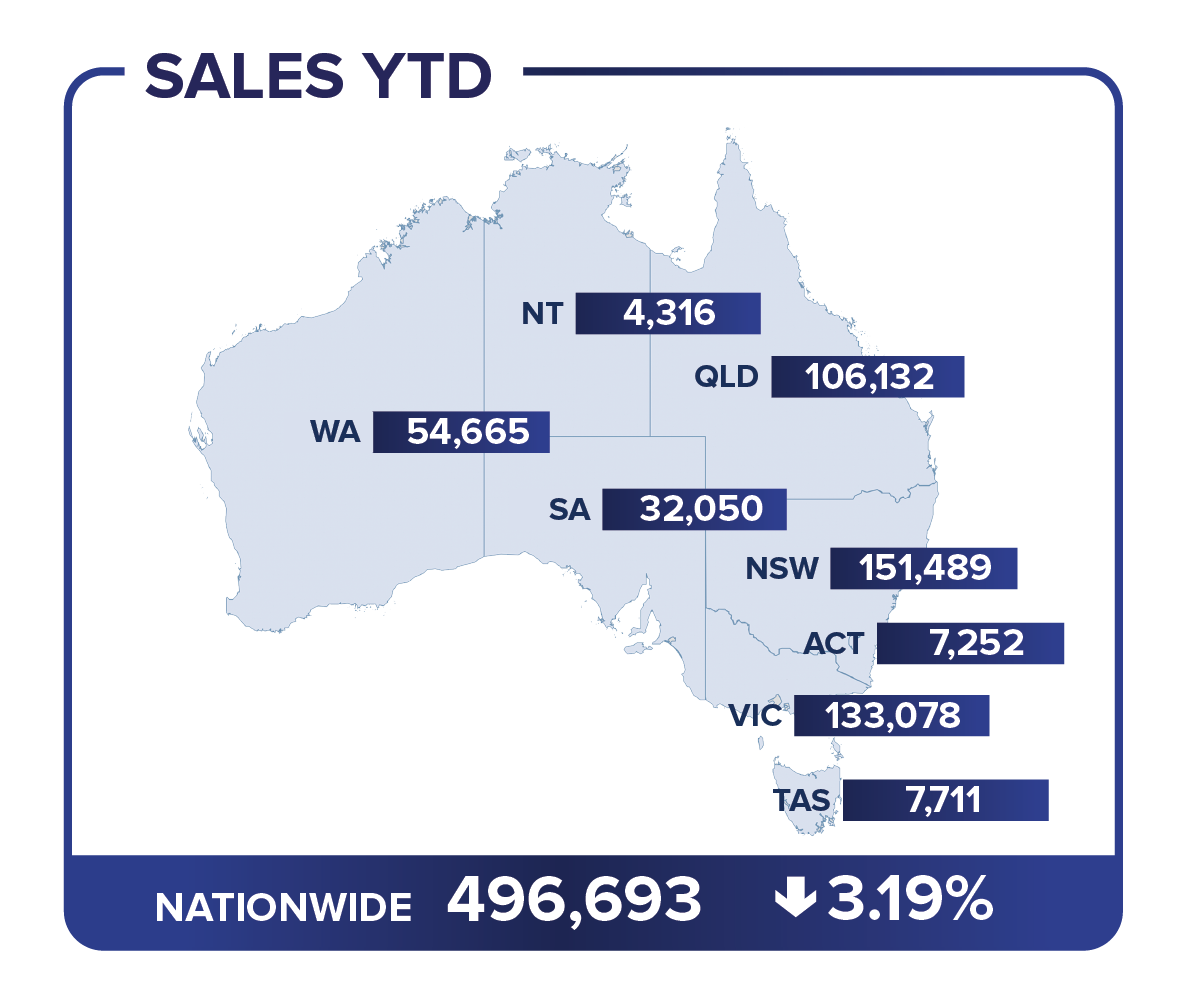
New vehicle sales in May 2025 fell by 1.64 per cent compared to May 2024, continuing the year’s downward trend with a 3.19 per cent decline year-to-date.

Key Market Highlights:

➡️ Chinese manufacturers now hold 15.6 per cent of new vehicle sales in 2025, with GWM and MG sitting in the top 10. Chery and BYD have seen strong growth with 245 per cent and 94 per cent growth year on year respectively, reflecting the increasing competitiveness of these brands across both value and electric segments.

➡️ There are no passenger cars in the top 10 models YTD and the Toyota Corolla was the only traditional passenger car to make the top 20 models list for the month. In contrast, SUVs dominate the YTD figures, holding down 7 of the top 10 spots, joined by 3 utes, reinforcing Australia’s preference for high-riding and utility vehicles.

➡️ Electrified vehicles account for 27 per cent of new vehicle sales when you combine BEV, hybrid and PHEV sales for 2025 so far.

The AADA has assessed VFACTs and EVC Top 10 Makes & Models YTD, ranking them by volume. The AADA has also analysed new vehicle sales figures by state for the month of May, as well as fuel types and market segments. 

Used Vehicle Market Remains Resilient Amid Seasonal Slowdown

The Australian Automotive Dealer Association (AADA), in partnership with AutoGrab, have released the April 2025 Automotive Insights Report, highlighting a seasonal softening in the used car market driven by April’s run of public holidays – and a marked rise in dealer market share compared to the same time last year.

Key insights from April include:

  • Used Vehicle Listings Decline: National listings dipped slightly to 310,054, down 0.6 per cent month-on-month.
  • Sales Volume Drops: Total transactions fell to 182,827, an 8.8 per cent decline compared to March, with notable drops in the ACT (-18.3 per cent), NSW (-12.7 per cent) and VIC (-11.7 per cent).
  • Dealer Share Surges Year-on-Year: Dealers accounted for 52.5 per cent of listings and 45.4 per cent of all used vehicle sales in April, a substantial increase of 12.9 and 10.5 per cent respectively compared to April 2024. The figures underscore dealers’ growing prominence in the online marketplace, driven by better digital tools, structured inventory management, and consumer trust in dealer-backed transactions.
  • Days to Sell Improved Marginally: Vehicles took an average of 49.7 days to sell, a slight improvement from 51.3 days the previous month, indicating a modest uptick in turnover efficiency.

“April is always impacted by public holidays, but what stands out is the year-on-year growth in dealer engagement,” said AADA CEO James Voortman.

“Dealers are driving a notable uplift in both stock and sales, clear evidence they’re actively stepping up to meet market demand,” he said.

“Electric vehicles remained a standout segment, defying broader trends with a 7.1 per cent rise in listings and an 8.4 per cent increase in sales compared to March. The EV used vehicle market is showing encouraging signs which, as a result should support a stronger residual valuation price supporting dealerships confidence in retailing and lenders having a better sense of risk,” said Saxon Odgers, Chief Commercial Officer, AutoGrab.

The April 2025 Automotive Insights Report offers an in-depth view of market trends, sales activity, and vehicle turnover across the country, providing essential intelligence for dealers, consumers, and policymakers.

Industry Affairs: On the Road with Dealers

Over the past month, the AADA has been actively connecting with members across Queensland, the ACT, and regional Victoria as part of our ongoing commitment to industry engagement and advocacy. These visits are a vital part of how we ensure the real-world experiences of dealers help shape national policy discussions.

As part of the Queensland Regional Dealer Roadshow, AADA partnered with MTAQ to visit dealerships in the Gold Coast, Toowoomba, Sunshine Coast, Townsville, and Cairns. The roadshow provided a valuable forum for open discussion on the pressing issues facing our industry. There was a strong sense of unity and momentum, particularly around the evolving partnership between AADA and MTAQ.

Townsville and Cairns saw particularly strong engagement, with dialogue expanding to cover the EV transition, challenges with DMS and classifieds providers, and broader regulatory changes. The feedback gathered during these sessions directly informs our advocacy priorities and strengthens our voice at a national level.

Our member outreach also extended to the ACT and regional Victoria — including Werribee, the Western District, and surrounding areas. These visits reinforced the vital role family-owned dealerships play in regional economies and highlighted the importance of tailoring policy to suit both metropolitan and rural business realities.

In the ACT, AADA-facilitated meetings between local dealers and key political figures, allowing for direct discussion on critical issues such as the proposed 2035 petrol and diesel vehicle ban, EV infrastructure, and the industry’s growing workforce needs.

Across all visits, one message was clear: Australia’s dealerships are deeply embedded in their communities, and the success of national policy depends on close collaboration with those on the ground. Dealer engagement ensures the collective voice of our members is heard at every level of government.

We thank all the dealers who participated and look forward to continuing these conversations in the months ahead.

National and State Dealer Representative Bodies Sign MoU

The Motor Trade Association of Western Australia (MTA WA), the Victorian Automotive Chamber of Commerce (VACC), and the Tasmanian Automotive Chamber of Commerce (TACC) have agreed to sign a Memorandum of Understanding (MoU) with the Australian Automotive Dealer Association (AADA), further strengthening cooperation between state, territory, and national organisations representing automotive franchised dealers.

This new agreement will build on the model established earlier this year between the Motor Trades Association of Queensland (MTAQ) and AADA, committing the organisations to closer collaboration and resource sharing for the benefit of their dealer members.

The MoU acknowledges MTAQ, MTA WA, VACC, and TACC as the peak bodies representing new car and truck dealers in their respective states and the AADA as the national peak industry body when dealing with issues of national significance. Together, they commit to coordinating policy positions, submissions, media communications, and committee representation to better serve dealers and ensure they are represented by one voice at both the state and national levels with regards to franchised new car and truck dealer issues.

“This is a major step forward for dealers in the signatory states who now will benefit from one consistent voice at both the state and national level. I am looking forward to working with my colleagues in Victoria, Western Australia, Queensland and Tasmania to ensure franchised new car and truck dealers have the best possible representation,” said AADA CEO James Voortman.

“This agreement represents a pivotal moment for our industry. By formalising collaboration between state and national bodies, we are strengthening our ability to advocate effectively and consistently on behalf of dealers. At a time when the automotive sector is facing rapid change, unity and coordination are more important than ever. MTA Queensland is proud to have helped pioneer this approach and fully supports this expanded national alignment,” said MTAQ CEO Rod Camm.

“Politicians respond best when they have one clear and strong voice to listen to. While the MTA WA has had a long working relationship with AADA, this MoU provides a great outcome for franchise dealers across Australia. Politicians will now receive one clear consistent message which should lead to better outcomes for our members,” said MTA WA Group CEO Stephen Moir.

“This agreement strengthens our ability to advocate effectively for new car and truck dealers across Victoria and Tasmania. By working in closer coordination with AADA, we ensure our members benefit from strong representation at both state and national levels. This unified approach will deliver better outcomes for automotive retailers while maintaining our focus on the specific needs of our Victorian and Tasmanian members,” said VACC CEO Peter Jones.

This agreement marks a major step towards achieving a unified and coordinated national voice for franchised dealers across Australia.