Obituary Col Crawford

Col Crawford, an industry legend from Sydney’s northern beaches passed away on Monday 24 May 2021. Mr Crawford’s family-owned and operated Col Crawford Motors was founded 54 years ago and his dealerships are an institution on the northern beaches. He was a trailblazing Dealer and a gentleman who was deeply involved in the community and charitable initiatives.

He leaves a lasting legacy with a third-generation family business. Mr Crawford is survived by his son Stephen and his daughters Carol and Sharyn, Stephen’s sons Harrison, Jake and Will, and Sharyn’s daughters Emma and Jade. His wife, Pammy, died in 2005. Col Crawford made a lasting contribution to the industry and will be missed but fondly remembered.

GoAuto penned a fitting tribute to Col Crawford and we encourage you to.

Webinar: Making Sense of the Automotive Franchising Reforms

Following the Government’s release of the amended franchising regulations on 31 May, we now have the full detail of the changes which will take effect from 1 July 2021.

On Tuesday, 15 June, the AADA and Australia’s leading automotive franchising law firm, HWL Ebsworth, are hosting a live webinar, where we will provide you with an informed assessment of the reforms’ effects for new car Dealers.

Join AADA CEO James Voortman and HWL Ebsworth Partners Evan Stents and Maria Townsend for an informative discussion on the Government’s recent automotive franchising reforms.

Event details:

  • Date: Tuesday, 15 June 2021
  • Time: 2:00pm – 3:30pm
  • Cost: Free
  • This is a free event but numbers a limited, so make sure to register below.

This is a free event for AADA members and numbers a limited, so make sure to .

AADA Gala Dinner 2020

On 22 April 2021, the AADA hosted a special Gala Dinner for Dealer members and Industry stakeholders in Sydney’s Tattersalls Club. The well attended event offered a great opportunity to celebrate some of the achievements the Industry has made over the past year or so.

Attendees were delighted to hear from guest of honour, Senator Deborah O’Neill. The AADA Chairman, Terry Keating, publicly acknowledged the important role played by Senator O’Neill in the recent Dealer/Manufacturer Senate Inquiry and thanked her for her work in highlighting the power imbalance that exists between Dealers and Manufacturers.

The event also provided an opportunity to honour the outstanding work of former AADA CEO David Blackhall, who led the AADA until end of June 2019 and made the need for stronger protections for Dealers against OEMs the number one priority in the AADA’s advocacy work.

It was a memorable evening of celebration, networking and lively exchange between like-minded industry representatives and stakeholders.

AADA Magazine – April 2021

The quarterly updated and published July edition of the Automotive Dealer Magazine is now available and can be accessed online.

This edition is packed with news and features providing crucial information and opinions on key issues impacting Dealer organisations and profitability.

Download your copy today.

Download Magazine

Talking Automotive Podcast with James Voortman – How the AADA Empowers the Dealer Network

In “Talking Automotive” with Mark and John” Ep 29, Mark Palavestra and John Sinclair talk to AADA CEO James Voortman CEO about the Australian Automotive Dealer Association and the services they provide to automotive Dealers in Australia.

James covers the canvassing the AADA do on behalf of Dealers in Canberra at a political level. He also delves into agency, electric vehicles and protection for Dealers in balancing the power between Manufacturer and Dealer. James also shares information on study tours and conventions they provide.

BDO: 2021 NADA Conference Review

The 2021 National Automobile Dealers Association (NADA) conference took place in February, albeit via virtual delivery because of the COVID-19 pandemic. Despite this, the conference saw automotive leaders from around the world come together to discuss the current state of the retail motor industry and what we can expect in the future.

BDO UK have released their annual NADA Review, outlining lessons learnt from the conference and the actions automotive industry organisations can take to improve their performance.

One key takeaway from the conference was the need to improve the employee experience to enhance the customer experience. With customers stating experience is more important than the price when making a purchase decision, and staff turnover in the industry at an all-time high, dealers must consider their employment strategies to entice and delight their customers.

A copy of BDO’s NADA review can be downloaded at BDO’s Website.

AADA Consumer Survey

The AADA has recently conducted a study to understand the perspectives and preferences of new car buyers when purchasing a vehicle and interacting with new car Dealers. The AADA also sought to understand the potential impact on consumers of the Manufacturer-led fixed-price sales model.


CONFIDENCE IN CAR BUYING PROCESS

One of the key findings of the survey was that the vast majority of 94% of Australians are comfortable with finding the best car for their needs and navigating through the car buying process. Just 1% suggested that they are not confident with the car buying process.

Consumers are also confident when it comes to interacting with new car Dealers, with almost 9 in 10 (87%) stating that they are confident in interacting with Dealers. This shows that the new car Dealer experience isn’t seen as a significant barrier to purchasing a vehicle.


IMPORTANT FACTORS FOR CONSUMERS WHEN BUYING A CAR

One factor important for most car buyers (91%) is the ability to test drive a car before buying it. More than 2/3 of those even considered a test drive as a “very important” factor.

When it comes to finding the right car, dealership sales staff is and remains an important factor in the process, with 8 in 10 people stating they value the advice provided by sales staff.

The ability to negotiate on the price of a new car in the dealership is also highly valued by consumers, regardless of age, gender or brand of vehicle purchased. A total of 90% said they valued the ability to negotiate, with half of those (51%) stating it helps them to get a better deal. 85% of consumers also like to negotiate on add-ons.


HOW APPEALING ARE NEW SALES MODELS?

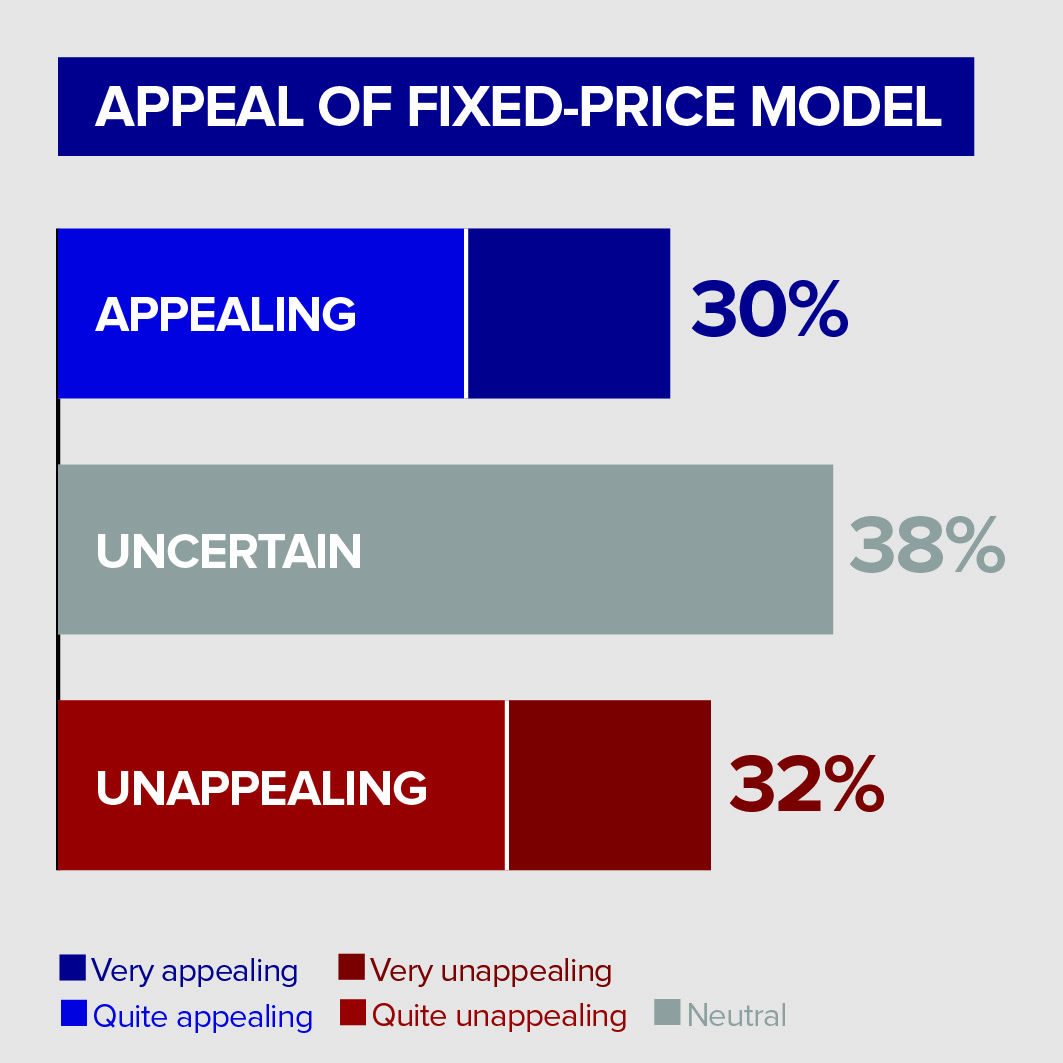
7 in 10 Australians find the idea of buying a new car at a fixed-price either unappealing (32%) or are uncertain (38%). There was a high level of concern that  a fixed-price model would drive prices up for everyone, with 52% suggesting that such a model would lead to higher prices for new cars in the market.

However, consumers did note the simplicity and potential ‘fairness’ of the agency model. Overall, the appeal of the fixed-price/no negotiation model is relatively consistent across demographics, although there are tendencies for it to have greater support among younger consumers, premium brand buyers and men.


When it comes to the notion of buying a new car online instead of at a physical dealership, the market is divided. Almost half (46%) wouldn’t consider buying a car online, while around one in three (29%) would be willing to do so. This highlights the importance of new car Dealers in the new car purchasing process.

Dealer/Manufacturer Relations Senate Inquiry – Final Report

On 18 March 2021, the Senate Committee conducting the Inquiry Into the Relationship between Car Dealers and Manufacturers delivered its final report. This was a long running inquiry which began by looking at the closure of Holden and its suddenly disenfranchised 185 Dealers across the country. The Inquiry provided scrutiny of the behaviour of several Manufacturers and highlighted the impacts of the power imbalance that exists between the Manufacturers and their much larger franchisors.

Over 70 submissions were received and considered by the Senate Committee which also heard public testimonies from the AADA, AADA members and representatives from several Manufacturers, among others.

The Committee concluded its report with seven recommendations which are fully supported by the AADA.

The Recommendations are:

Recommendation 1
3.92 The committee recommends that the Australian Competition and Consumer Commission should expedite its investigations into the behaviour and actions of GM Holden and should commit to provide regular public updates on this investigation and similar investigations into the relationship between manufacturers and dealers in the future.

Recommendation 2
3.93 The committee recommends that the Australian Competition and Consumer Commission proactively ensures that General Motors Australia and New Zealand is meeting its Australian Consumer Law obligations to Holden vehicle owners in relation to warranty and recalls, technical support and access to parts.

Recommendation 3
5.82 The committee recommends that the Australian Government prioritise the new automotive reforms announced on 12 March 2021 and implement the increased fines, mandatory principles and protection of dealers operating as a manufacturer’s agent by 1 July 2021.

Recommendation 4
5.83  The committee recommends that the mandatory best practice principles include a provision for the reimbursement for all reasonable expenses incurred in relation to warranty and recall work, including expenses associated with diagnosis, administration of claims and claim audits.

Recommendation 5
5.84The committee recommends that the Australian Government introduce mandatory binding arbitration to resolve disputes during contracted negotiation in the automotive industry which are not able to be resolved by other dispute resolution mechanisms.

Recommendation 6
5.85 The committee recommends that the Australian Government appoint a senior officer in the Office of the Australian Small Business and Family Enterprise Ombudsman to investigate and coordinate dispute resolution investigations and facilitate mediation and arbitration arising from the transformation of the voluntary best practice principles into mandatory obligations.

Recommendation 7
5.86 The committee recommends that the Australian Government undertake a review into effectively enforcing alleged contraventions of the Competition and Consumer Act 2010 as it relates to the regulation of the relationship between car manufacturers and car dealers.

The full report is available for download from the Senate Inquiry’s website.

Changes to Automotive Franchising Laws

AADA members would by now be aware of an announcement on 12 March 2021, by the Prime Minister Scott Morrison and former Family and Small Business Minister Michaelia Cash about strengthening of the Franchising Code of Conduct (FCC) and other measures to better protect new car Dealers.

The first tranche of changes takes the voluntary principles introduced late last year and embeds them in the FCC as mandatory obligations.

The FCC will be changed to reflect the following principles:

Principle 1

Franchisors should include provisions in new dealership agreements that provide for fair and reasonable compensation for franchisees in the event of early termination resulting from: withdrawal from the Australian market; rationalisation of their networks; or changes to their distribution models.

Principle 2

Franchisors should not include provisions that exclude compensation in new dealership agreements.

Principle 3

The ‘fair and reasonable compensation’ as referred to in Principle 1 above should include appropriate allowances for the loss a franchisee may incur, which can include:

  1. Lost profit from direct and indirect revenue
  2. Unrecovered expenditure and unamortised capital expenditure where requested by the franchisor
  3. Loss of opportunity in selling established goodwill
  4. Wind up costs

Principle 4

When an agreement is entered into it should provide franchisees a fair and reasonable time to secure a return on investments that have been required by franchisors as part of the agreement.

Principle 5

Agreements should include reasonable provisions for franchisors to compensate or buy back new vehicle inventory, parts and special tools, in the event of: non-renewal; withdrawal from the Australian market; rationalisation of their networks; or changes to their distribution models.

Principle 6

Agreements should include provision for timely commercial settlement and dispute resolution.

The AADA is working with the Department of Industry to finalise the detail of these changes and ensure that the intent is captured in the new regulations. The Government has also committed to making sure that the new reforms will explicitly capture new agency arrangements and that in future breaches of the Code are liable to incur fines of up to $10 million.

Further work will also be undertaken by the Government, in consultation with the industry, to establish a dispute resolution process that includes mandatory binding arbitration while also investigating the option of creating a stand-alone Automotive Franchising Code.

Future Fuels Strategy Discussion Paper

The Federal Government released a discussion paper calling for submissions from industry to help form national policy on the implementation of low emissions road transport technologies. This policy will include elements which help establish the required infrastructure necessary to support hydrogen and plug-in electric vehicles. It is guided by three principles:

  1. Addressing barriers to the roll out of new vehicle technologies to increase consumer choice.
  2. Government investment in early-stage technologies to stimulate the market and private sector investment.
  3. Access to information to help people make informed choices.

In response the AADA has provided a set of key recommendations for the Government to consider, as follows:

  1. The Federal Government has an important role to play in developing a strategy for the roll out of low emissions charging infrastructure with state governments, vehicle Manufacturers, electricity retailers and other private sector participants. As automotive Manufacturers role out new powertrain technology in vehicles, their franchised Dealers are required to install refuelling/recharging facilities as part of their franchise agreements. These facilities could potentially provide consumers with important refuelling/recharging points, especially in rural centres where public infrastructure may take longer to install and commission.

  2. Dealers already play an important role in the delivery of vehicles to commercial fleet operators and in some circumstances are also responsible for the sale to fleets. The future fuels strategy should include Dealers as important providers of information, service and support for fleet buyers.

  3. Biofuels may not be compatible with the fuel systems in some vehicles and may not be approved for use by some Manufacturers. This potentially creates a warranty risk for consumers and these risks need to be clearly conveyed to car buyers considering using these fuels. Consideration should be given to the use of these fuels to ensure realisation of the environmental benefits and mitigate potential consumer detriment.

  4. Dealers currently provide consumers with comprehensive advice on motor vehicles which helps consumers to choose the car that is right for them. Dealers are an important source of information and support for customers both before and after the sale.`

The Government strategy will be supported by the Australian Renewable Energy Agency (ARENA) and the Clean Energy Finance Corporation (CEFC) and through significant government funding commitments of $74.5 million to the Future Fuels Package and $24.5 million to the Freight Energy Productivity program.